

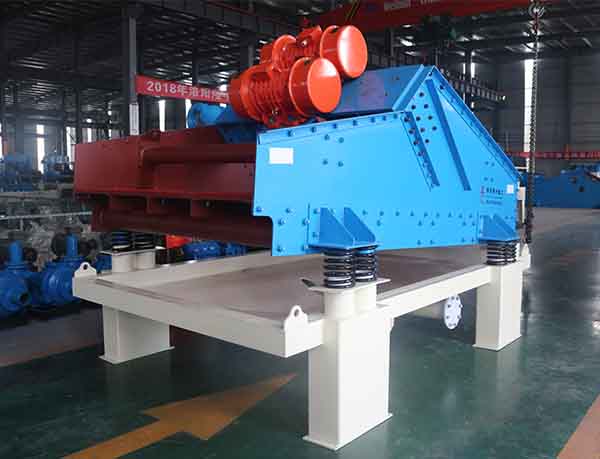
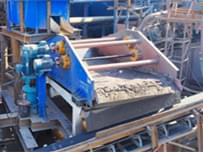
The operation of the linear vibrating screen is related to many aspects, including the equipment's own technical parameters, whether the operation is standardized and regular maintenance. What is the reason for the obvious uneven material conveying phenomenon in the linear vibrating screen? 1. Vibration motor tilt Angle The exciting force generated by the vibrating motor makes the material jump forward in a designed fixed direction on the screen surface to achieve the purpose of dehydration. The inclination angle of the motor of the linear vibrating screen is generally a fixed value. According to the material condition and processing capacity, the excitation force will be adjusted by adjusting the angle of the eccentric block. For linear screens with double eccentric blocks and shafts, the eccentric mass of the eccentric blocks can be adjusted to increase the excitation force, the phase angle of the double eccentric blocks and the shaft can be changed, and the direction of the excitation force can be changed. 2. Damping spring strength For linear vibrating screens, damping springs play an important role in maintaining the stability of the vibrating screen and prolonging its life. Damping springs are divided into rubber springs, spiral steel springs, and composite springs.…
read more >>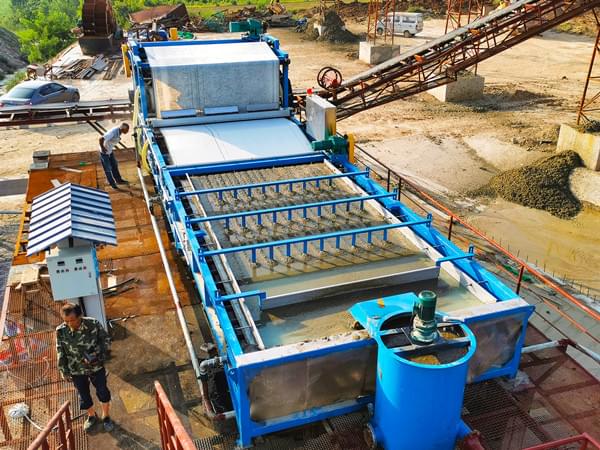
The filtering principle of sludge dewatering machine filter press is a process for separating solid particles suspended in liquid or gas. The sludge treatment needs to go through three main links: pretreatment, sludge concentration, and dehydration, back-end disposal. The processing capacity is the primary index to evaluate the comprehensive performance of the belt filter press. There are many factors that affect the processing capacity of the sludge dewatering machine belt filter press, but they are mainly reflected in the gravity dewatering area, the pressing area and the operating speed of the belt, the tension of the belt, the diameter of the roller, the selection of the belt and the effect of dosing and so on. These factors are also a comprehensive reflection of the structural design, production, and manufacturing quality of belt filter press. Therefore, understanding the calculation method of the processing capacity of the belt filter press has certain guiding significance for optimizing the design of belt filter press, selection of operating parameters, reasonable dosing, and so on. The filter press has the advantages of unique multi-stage dewatering design, high dewatering efficiency, less water in filter cake. It is widely used in sewage treatment, papermaking, leather, and other sewage…
read more >>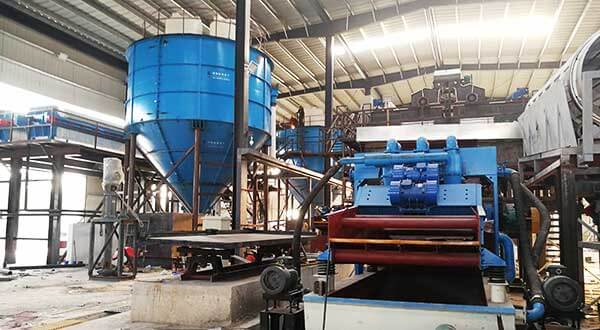
Tailings dewatering is a new tailings disposal technology that has gradually emerged in recent years. It means that the tailings slurry output by the beneficiation process is concentrated in multiple stages and then processed by high-efficiency dewatering equipment such as dewatering vibrating screen to form the dry, drip-free, and easy to handle products, as well as the clean water can be reused in the process. Applications of the tailings 1. Recycled sand and gravel aggregate 2. Concrete fine aggregate 3. Production of building materials 4. Reclamation by tailings and establishment of ecological zone 5. Recover the valuable ingredients Traditional tailings disposal The vast majority of domestic tailings still use wet discharge and are stored in tailings ponds. This traditional technology is harmful to the environment and safety. The tailings ponds and thickeners are also used for tailings treatment in traditional tailings treatment. There are many problems in this processing technology, the main problems are as follows: the tailings sludge cannot be effectively dewatered, low water cycle utilization rate, and big power consumption, tailings pond covers a large area, high potential safety hazards, long conveying distances, large investment costs, and high operating costs. LZZG new tailings dewatering system 1. Equipment configuration Tailings…
read more >>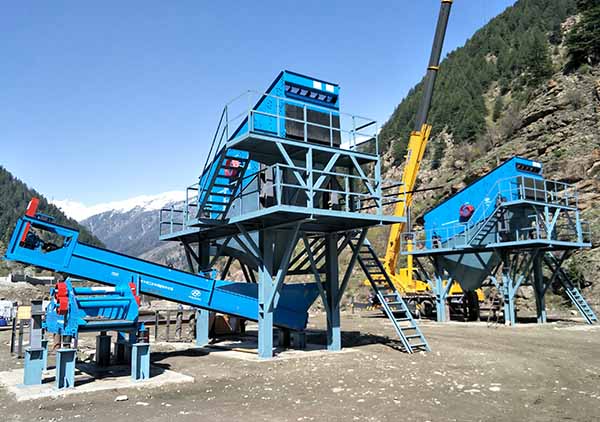
Screening is a common process in sand and gravel production lines. Classification according to the shape and size of different materials, whether it is the pre-screening at the front end or the separation of the finished materials at the end, screening is inseparable. 1. Pre-screening Pre-screening is required before crushing because the raw material has a large particle size range. Large pieces of material need to be roughly broken with a jaw crusher. In order to avoid excessive crushing, small pieces of materials can be directly screened and then enter the subsequent equipment without entering the jaw crusher for crushing. The screening at this time is called pre-screening. For sand and gravel production plants, pre-screening can avoid ineffective crushing of materials, thereby increasing the production capacity of crushing equipment and reducing power consumption. Adding a screen on hopper or a special vibrating screen both are the ideal pre-screening equipment. 2. Inspection screening--circular vibrating screen In lots of sand and gravel production lines, the screening equipment also is equipped after the crushing process to control the size of crushed products. The unqualified materials are screened out or returned to the crusher for crushing until they meet the particle size requirements. This can be called inspection screening. Its purpose is to…
read more >>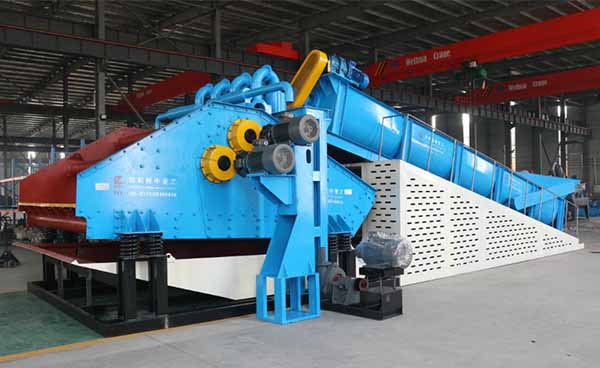
The aggregate sand washer sale New Zealand is mainly used to screen and clean the raw stone and the crushed aggregate of construction waste to obtain high-quality finished sand. While ensuring the quality requirements of the project, it ensures sufficient productivity to meet the supply of stone materials for the concrete mixing plant. Materials: sand, gravel, crushed stone, the crushed aggregate of construction waste Application: sandstone yards, sand making plants, sand washing plants, construction site, prefabrication plants, hydropower site, mining processing. Processed material size: 0.074-100mm Aggregate sand washer for sale New Zealand The main workflow of the aggregate sand washer is raw material screening, cleaning, dehydration, fine material recovery, finished material transportation, and sewage sedimentation and reuse. The raw materials are continuously tumbling in the mixing drum, and then soaked, scrubbed, and rubbed between the materials to separate the stone and mud, which greatly improves the cleaning efficiency of the stone. Aggregate sand washers are widely used in various hard-to-wash large ore in the market. And the second cleaning before unloading the stone can completely meet the requirement of mud content less than 0.5%. Aggregate sand washer features 1. High washing and screening efficiency. 2. The mud content of finished products processed…
read more >>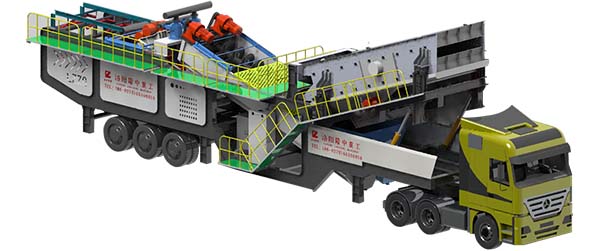
The mobile sand washing plant can also be called vehicle-mounted sand washing machine, which is a variant based on the traditional fixed sand washing machine. It is an inevitable product under the new era of high-tech sand washing technology. All equipment and accessories are set on the vehicle chassis, and various cleaning, screening, dewatering, and fine sand recycling equipment are equipped on the top to form a mobile sand washing production line. The main feature of mobile sand washing plants is that it can be moved and operated without being restricted by the site environment, more convenient to transfer, and easy to operate. Therefore, it has a wide range of applications in the current sand and stone plant, used for washing and impurities removing of various fluid sand and stone materials. According to production capacity requirements, users can choose a single machine operation, or a multi-unit sand production and screening cleaning production line to complete a larger scale sand production and sand washing operation. Working principle 1. Structure Mobile trailer, a screening device, sand washing device, dewatering screen, slurry pump, motor, belt conveyors, electric control and hydraulic system, etc. 2. Working flow The material is uniformly fed to the vibrating…
read more >>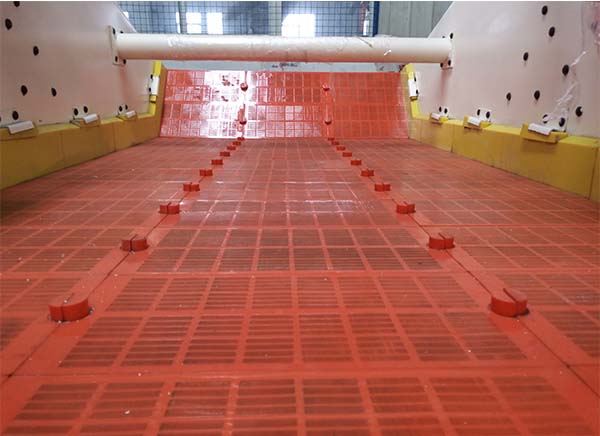
The size of the mesh using in the dewatering screen is generally configured by the manufacturer before the equipment leaves the factory, which usually set to 0.16mm, and can be customized depends on customer’s requirements. LZZG already has a set of solutions for different needs for the mesh size of the dewatering screen. The mesh of dehydration screen can affect the dehydration effect, so it is necessary to equip proper mesh size. There are many kinds of mesh shapes of dehydration sieve, the common ones are round, square, and rectangular. The choice of the mesh shape of the dewatering screen mainly depends on the requirements for the size of the sieved product and the use of the product under the screen. In order to get higher screening efficiency, different screen hole shapes must be selected for different materials screening. Choose square screen holes for processing bulk materials and rectangular screen holes for processing plate materials. In the case of certain screening material, the size of the screen hole has a great influence on screening efficiency. The effective area of the screen surface of the rectangular screen hole is large, and the production capacity is large. The particle size of material…
read more >>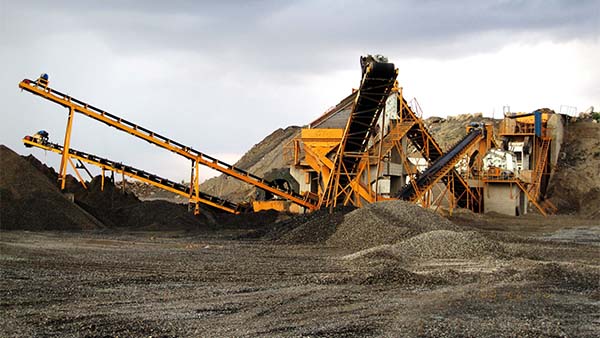
Generally, the total investment cost of a sandstone factory ranges from hundreds of thousands to millions. The budget involved includes early-stage certificate processing and mine purchase; mid-term equipment investment and plant construction; post-employment labor costs and equipment use and maintenance costs. Medium-term costs account for a relatively large part of the total budget, so users need to invest more energy in selecting equipment manufacturers. Site selection suggestion 1. Convenient transportation, convenient electricity, and water. 2. Stay away from residential areas. 3. Choosing an underwind for reducing pollution. 4. The area of the plant and the storage yard for raw materials and finished materials. 5. Site leveling Equipment configuration of the sandstone production line 1. Multi-stage crushing 2. Matching processing capacity of front and back equipment 3. Material size matching before and after equipment 4. More sieve less breakage, more breakage, and less grinding 5. Determine the belt conveyor based on the output and transport height difference 6. The flexible layout on site Equipment needed to start a sand and gravel plant The production process of a sandstone factory is generally hopper-feeding-crushing-sand making-screening-sand washing-finished sand and gravel, and each process is connected by belt conveyor. Therefore, the production equipment required by…
read more >>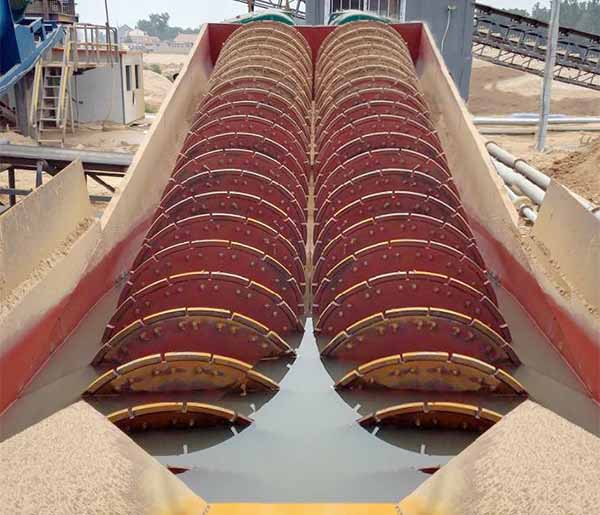
Aggregate washing is the process of cleaning and removing impurities in sand and gravel. It mainly uses freshwater to wash and dilute and remove impurities such as soil and stones contained in the sand and gravel. The more mud in the gravel, the greater the water consumption. So the aggregate washing water consumption has become a concern for many customers. How much water is needed to wash a ton of aggregate? In the actual process of aggregate washing, the water consumption needs to be determined according to the processing capacity and the soil content of the material. And for different types of sand washing equipment, water consumption also varies greatly. Excessive water supply will cause rapid water flow and excessive loss of fine sand. If the mud content of the material is too large, the correct method is to increase the number of sand washing machines, thereby increasing the number of sand washing and water consumption, rather than directly increasing the amount of water on a sand washing machine. The ratio of sand to water in the spiral sand washer is about 1:1 or 1:1.5, while the ratio of sand to water in the bucket sand washer is about 2:1 or 4:3.…
read more >> Aggregate processing plants include feeding system, crushing sand system, screening system and sorting system. The selection of aggregate processing plant is an important part of modern aggregate production. Studies have shown that gravel aggregate has become the second largest consumable for human beings. What’s the aggregate? Aggregate plays the role of filling and racking in concrete, which is loosely granular and improves the durability and stability of concrete. According to the particle size, it can be divided into coarse aggregate and fine aggregate. Fine aggregates with a particle size between 0.15-4.75mm are commonly known as sand; Coarse aggregates with particle sizes between 4.75 and 9.0 mm are commonly known as stones. According to the source, it is divided into natural, artificial and regenerated. Due to the depletion of natural gravel aggregates, the artificial sand market is relatively hot, and various slags, rocks can be processed to the required particle size through mechanical equipment. Aggregate processing plant process 1. Feeding system Vibrating feeder is commonly used to delivery raw materials to the crushers and vibrating screening equipment in the gravel aggregate processing plant. And sort and remove the debris in it to facilitate the next processing procedure. In the gravel aggregate processing…
read more >>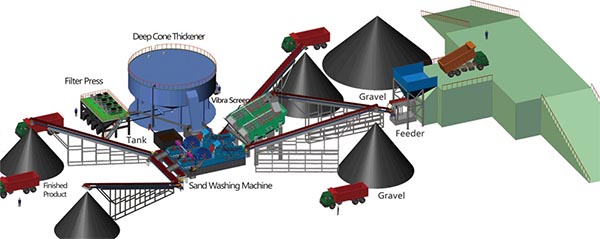
Sand washing water how to be recycled is a serious problem for sand field and environment. The wastewater treatment system as a new type sewage and mud treatment system with environmental protection, recyclability and reuse functions, which is mainly applied for processing and recycling sand washing water. composed of sand washing machine, fine sand recovery machine, thickener, dosing system and filter press. The concentration of suspended matter in the main pollution factor of sand washing wastewater is about 3000mg / L, forming a large amount of muddy water. The characteristics of the mud depend on its composition and local geological conditions. The general characteristic is that the appearance of mud is earthy yellow, uniform and sticky, and does not delaminate for a long time. The specific gravity is between 1.20 and 1.46; the mud content is 20% to 30%, and the PH value is 6 to 7. If these sand washing wastewaters are not treated timely and effectively, it will not only waste a lot of water resources, pollute the water quality, but also affect road traffic and the normal production and living of nearby residents. Sand washing water recycling process 1. Sand gravel enters the sand washing machine to realize the washing…
read more >>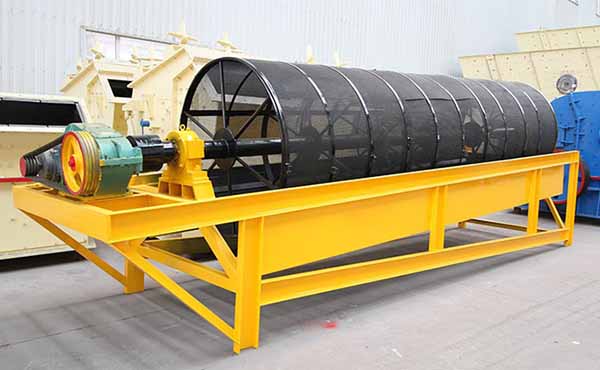
Mobile rotary screen for screening aggregate is mainly by controlling the particle size to realize the screening purpose, and the sorting accuracy is high. The mobile rotary screen is generally divided into several sections, depending on the specific situation. The sieve holes are arranged from small to large, and the sieve hole diameter on each section is the same. The mobile rotary screen adopts a closed structure, and no dust will be generated during screening. Feeding size: ≤400mm Processing capacity: 75-1300m³/h Motor power: 10-74kw Application: quarry, mining, coal mining, concrete mixing station, quartz sand, etc. Processing materials: sand, gravel, aggregate, coal, ore, silica sand, frac sand, etc. Structure The mobile rotary screen is mainly composed of motor, reducer, drum installation, frame, sealing cover, and inlet and outlet. The roller device is installed on the frame at an angle, and the motor is connected to the roller device through a coupling via a speed reducer to drive the roller device to rotate around its axis. During work, the screen holes are not easy to be blocked, the operation is very stable, the noise is low, and it has the characteristics of simple structure and convenient maintenance. Working principle After the material…
read more >>


Copyright © 2015 - 2026 Luoyang Longzhong Heavy Machinery Co., Ltd. Website Map | Privacy policy | Contact Us




Inquiry