

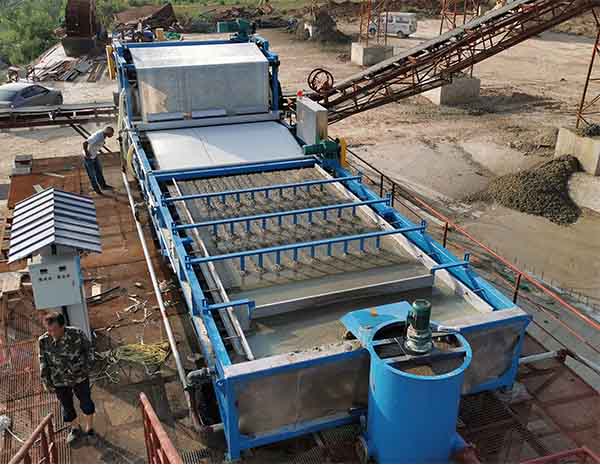
The sludge disposal methods in wastewater treatment include the sludge dewatering process and the sludge drying process. The wastewater will produce a large amount of sludge after sedimentation and concentration treatment, the water content is still high, and the volume is large, which is difficult to dispose of. The sludge must be dehydrated to increase the solid content of the sludge cake to reduce the area occupied by sludge stacking. 1. Sludge dehydration The sludge disposal must first be concentrated and mechanically pressed to make the sludge harmless and reduce the amount. The fluid sludge with a moisture content of more than 90% can form a sludge cake after being dried by a sludge filter press. The moisture content of the final mud cake is about 30%-60%. The sludge dewatering process is usually completed by belt filter press and chamber filter press. A. The belt filter press has the characteristics of being less affected by sludge fluctuations, continuous operation, large output, stable operation, low start-up consumption, simple control, and so on. At present, most of the newly-built wastewater treatment plants in China use belt filter press dehydrators. B. Compared with other dehydrators, the chamber filter press has a higher solids content in the mud cake…
read more >>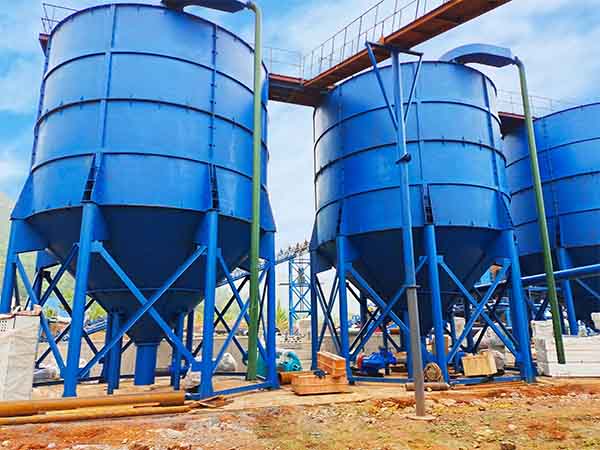
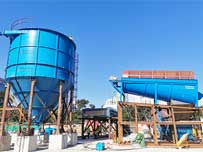
The thickener adopts a vertical sedimentation tank combined with gravity sedimentation to complete the thickening process. The slurry wastewater with a solid content of 2% to 10% is settled by gravity and raised to a slurry with a concentration of 40% to 60%. The upper part of the tank realizes clear water overflow, so as to achieve the purpose of sewage purification and solid-liquid separation. What is the thickening process? The thickener is a solid-liquid separation device based on gravity sedimentation. The metal steel plate welded plate is used as the structural material and the tank body has a circular structure. The lower part of the tank is a cone-shaped cylinder (the stack angle is 45 degrees), the pillar is a four-pillar structure, and the center feed pipe is deep to 3/4 of the body. The top of the tank is equipped with an overflow weir, the bottom of the tank is equipped with a discharge port with a discharge raft gate, and the bottom is equipped with a back-blowing blocking air inlet raft. The thick tank can directly feed the low-concentration slurry containing 3%-20% through the upper central feed pipe. The center tube installed at the upper part of the thick…
read more >>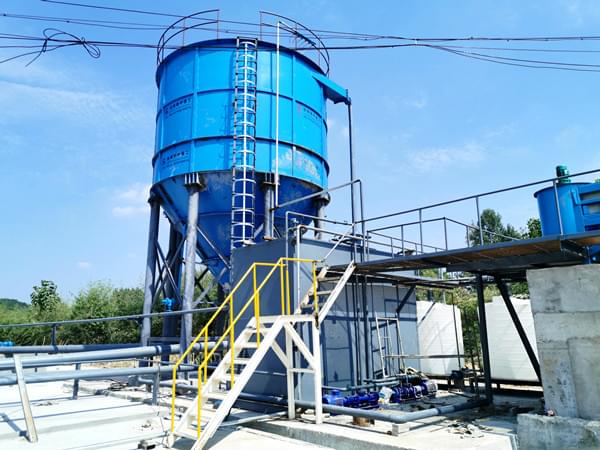
The thickening method on sludge treatment developed and produced by LZZG mainly includes three parts: sand-mud separation, mud-water separation, and solid waste dry discharge. The thickening method is mainly used to treat the waste mud water in the sand washing plant and tailings, turning the mud water into clean water and flowing out from the overflow of the purification body, as the supplementary water for the washing system. The mud processing capacity of a single thickener is generally 30-200 cubic meters per hour. After the thickener, a chamber or belt filter press is usually connected to squeeze the mud into a mud cake with a water content of 25%-35%, thereby reducing the environmental pollution. The internal structure of the turbulent flow and sedimentation of the thickener, supplemented by flocculants, make the sewage purification body have a wide range of uses. Thickening method on sludge treatment 1. Separation of mud and sand The separation of mud and sand mainly relies on the cleaning of sand and gravel cleaning equipment or integrated sand washing and recycling equipment to desludging the material slurry (concentration <50%). 2. Mud and water separation After the silt is separated, the wastewater is concentrated by the separator. The separated sewage enters the…
read more >>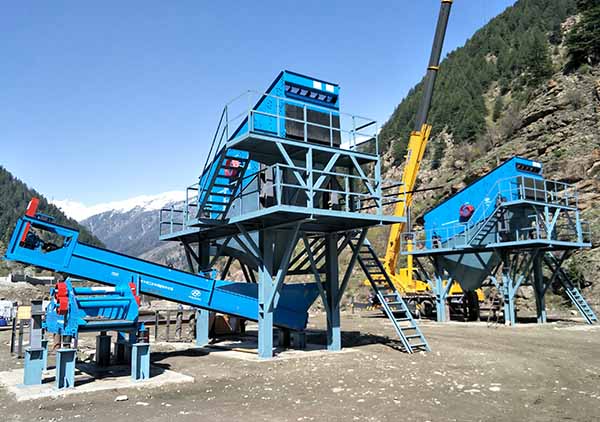
The screening efficiency of the vibrating screen affects the subsequent operations in the production line. How can screen efficiency be improved is worthy of attention. There are many factors that affect the screening effect of the vibrating screen. The more important factors are the characteristics of the material, the screen surface parameters, and the motion parameters of the vibrating screen. 1. The characteristics of the material The particle size and moisture content of the material directly affect the screening effect. When the particle size of the material is close to the mesh size, the screening efficiency will be significantly reduced. These particles will block the screen holes, resulting in a reduction in the effective screening area. When the water content of the material is large, the material is prone to adhesion, which reduces the screening efficiency. Solution A. Increase the vibrating screen amplitude. Increased amplitude can promote fine-grained materials to pass through the screen surface and reduce blockage. B. Increase the pass rate of the middle part of the screen to improve the screening effect. C. Change the feeding method to improve the utilization rate of the screen surface. Multi-channel feeding is used to reduce the movement time and distance…
read more >>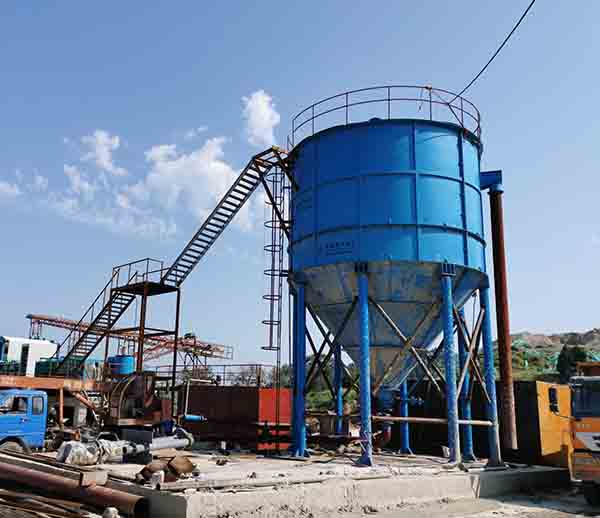
The thickener is solid-liquid separation equipment based on gravity sedimentation and is a commonly used thickening equipment in concentrators. In practical applications, the thickener will also encounter problems, which will affect the normal operation of the concentrator. The following are the three common thickener problems, and the corresponding solutions are given. 1. Overflowing Muddy overflowing water is one of the common failures of thickeners. The thickener cannot perform solid-liquid separation well, and the overflow is turbid. The reasons and solutions for this problem are as follows: Main reason A. A certain amount of air is mixed in the pulp, and the intervention of air causes the pulp to produce a large number of bubbles during the mixing and stratification, which makes it muddy. B. The ore slurry contains too much mud, which will make the overflow difficult to clarify, especially the fine sludge of 0.1-0.001μm.. C. Too much processing capacity and too small underflow control can also easily cause muddy running. D. Improper control of the sedimentation layer. The sedimentation layer is too thin, so that some fine mineral particles have poor filtering effect and enter the overflow. Too thick will block most of the water into the pool under…
read more >>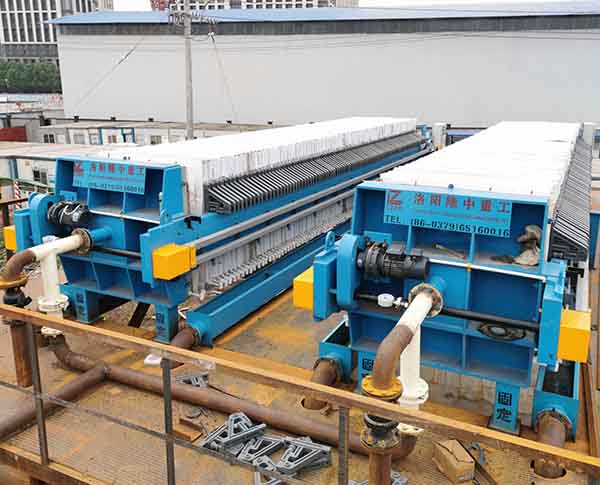
The chamber filter press is a kind of filtration equipment used for solid-liquid separation of various suspensions. It is often used in dewatering operations of concentrate and tailings in concentrators. What are the common failures of filter press in daily operation? How to solve it? 1. Damaged filter press frame A. The mud is too thick and the feed port is blocked. Only the pressure of the hydraulic system itself is left between the filter plates, and the plates are extremely easy to cause damage due to prolonged pressure. B. Insufficient feeding will cause excessive force or damage to the frame itself. C. If the outlet is blocked by solids or the feed valve/discharge valve is closed when starting, the pressure will not leak anywhere, which will cause damage to the filter press plate frame. D. If the filter plate is not cleaned thoroughly, the medium will leak, so that the mud cake cannot be formed. Solution A. Using the scraper to remove the mud from the feed inlet. B. Reducing the volume of the filter plate. C. Checking the filter cloth and clean the drain. Open the corresponding pressure valve and release the pressure. D. Carefully clean and repair…
read more >>
The high weir screw washer, low weir screw washer, and submerged screw washer are three different types screw sand washing machine. The biggest difference is the design of the bottom water tank. The screw sand washer is commonly used in conjunction with the crusher and vibrating screen in the sand washing line. And also used for grading ore and fine mud in gravity concentrators, and grading the size of ore slurry in the metal ore dressing process, or desliming and dewatering in ore washing operations. The spiral sand washing machine is equipped with a longitudinal long shaft in an inclined semicircular groove, and a rotating blade is installed on the shaft, which is driven by the upper transmission mechanism to rotate, and the lower part has a spiral lifting device. The spiral sand washing machine relies on the principle that the solid particles are different in size and specific gravity, so the sedimentation speed in the liquid is different. The fine ore particles float in the water and overflow, while the coarse ore particles sink to the bottom of the tank and are pushed upward by a screw to be discharged to the upper part of a device for mechanical…
read more >>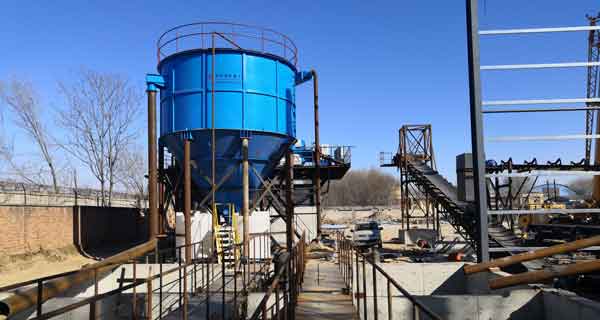
High efficiency thickener is mainly used for solid-liquid separation processes such as liquid concentration and wastewater treatment. The increased height-to-diameter ratio of the high-efficiency thickener allows the fine-grained pulp to stay longer in the machine. The application of high-molecular flocculant strengthens the coagulation effect of the pulp, thereby producing clearer overflow water and thicker underflow. High efficiency thickener structure The transmission structure of the tank and rake frame of the high-efficiency thickener is roughly the same as that of the ordinary thickener. The high concentration efficiency is mainly due to the special feeding barrel. There are three main types of high-efficiency thickeners commonly used abroad: Einco-BSP type, Dorr-Oliver type, Enviro-Cldar type. The feeding drum is divided into three vertical mechanical mixing chambers, which are concentric with the central vertical axis of the thickener. The ore slurry enters the mixing chamber through the feeding pipe, and after being fully mixed with the flocculant, it is directly fed to the middle and upper part of the sedimentation layer through the feeding pipe radially distributed in the lower part of the mixing chamber. After the liquid is filtered by the sand layer, it rises to overflow, and the flocs stay in the sand layer and enter the…
read more >>
The gravity thickener is a solid-liquid separation device based on gravity sedimentation, usually made of concrete, wood, or metal welded plates as a structural material to build a cylindrical shallow groove with a cone bottom. The slurry with a solids content of 10%-20% can be concentrated by gravity sedimentation into an underflow slurry with a solids content of 45%-55%. How does gravity thickening work? The slurry enters the thickener, and the deflector at the outlet end of the feeding shaft guides the slurry to the surroundings, so that the slurry spreads to the surroundings. Under the action of the flocculant, a mud layer is formed and settled to the bottom of the thickener. The liquid rises through the sedimentation layer. The sedimentation layer acts as a filter to prevent fine particles from rising. The slurry produces movement in the sedimentation layer, causing the particles to contact the flocculant and continue to produce flocculation. The rake pushes the dense slurry to the center discharge barrel, and then is discharged by the slurry pump. The high-efficiency thickener feeds the slurry into the central buffer cylinder, forming a circulation in the central buffer cylinder, which plays a role in reducing the impact of…
read more >>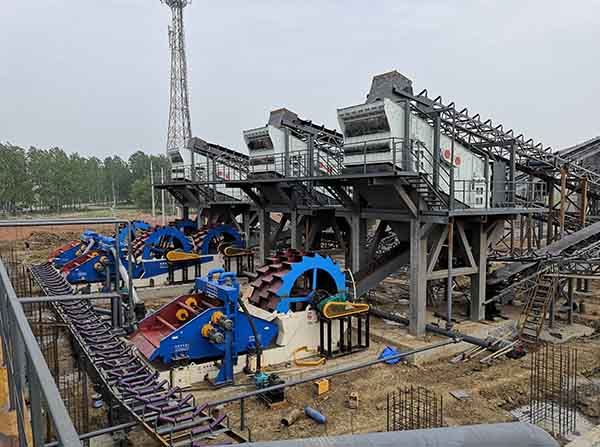
The sand washer machine will affect the sand washing effect and efficiency due to various problems in the long-term production and operation process. Introducing 7 ways to improve the efficiency of the sand washer machine. 1. Prevent debris from entering The cleanliness and mud content of sand is one of the reasons for the decline in the output of sand washing machines. During the cleaning process of the sand washer, impurities should be avoided to affect the cleaning effect of the finished product. In addition, it is necessary to prevent materials with high hardness from entering the inside of the machine, causing wear and tear to the equipment and reducing the service life. 2. Material concentration The material concentration is also related to the processing capacity. The processing capacity of the sand washing machine reaches its maximum under the critical concentration. The critical concentration is related to the specified graded particle size and varies with the density of the ore and the mud content. The higher the ore density or the lower the mud content, the higher the critical concentration, and vice versa. The relationship between the critical concentration and the graded particle size is the same as that of…
read more >>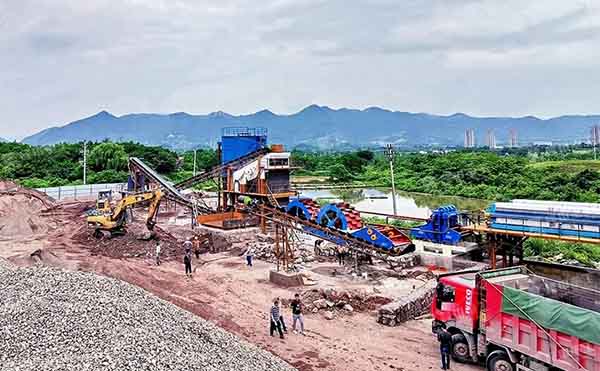
A sand washing process includes material screening, cleaning and recycling, dewatering, and wastewater treatment depends on the different required finished sand. Only by understanding the size of raw materials, output requirements, and finished product particle size requirements can we configure an efficient and high-quality production plan. Granite is a relatively common rock and an advanced building material. Its color is beautiful, with high hardness, abrasion resistance, weathering resistance, and corrosion resistance. And with the development of the machine-made sand industry, granite has become a common material for machine-made sand. In the sand washing process, the sand and gravel raw materials need to be coarsely crushed and finely crushed, and then processed into sand by sand making treatment, then washed by the sand washer, dehydrated by the dewatering screen. Because the requirements for the finished product of sand are relatively high in industrial construction, the direct processing into machine-made sand generally cannot be used directly. Sand washing plant equipment configuration The configuration of sand washing process generally needs 3 stages Sand washing and recycling machine: separation of mud and sand Fines recovery unit: fine sand recycling Solid waste dry discharge: achieve complete separation of mud and water The sand washing and recycling integrated machine clean…
read more >>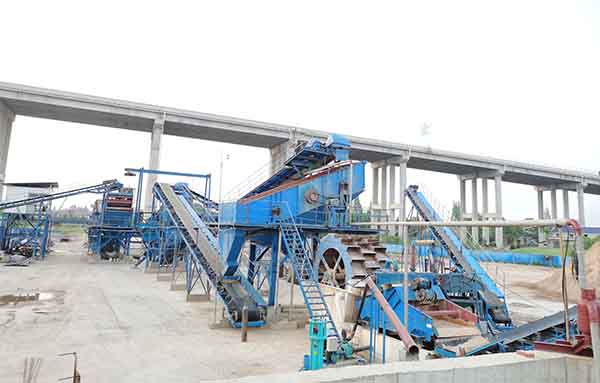
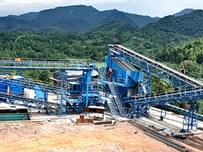
The sand washing line is mainly equipped with sand washing machine, vibrating screen, and dehydration screen to complete the cleaning, dehydration, and recovery of sand and stone materials, so as to get clean-finished sand. Sand washing 1. Processing material: mechanism sand Equipment configuration: sand washing machine 2LZ36-120-2442J, thickener S-6050, fines recovery unit, chamber filter press G250-125 Processing capacity: 150t/h x two lines This kind of production line is mainly used for the recovery of solid particles in the production process of machine-made sand, tail water purification, and dry solid waste treatment. It is one of the sand and gravel production lines with very high utilization rate at present, with scientific, reasonable and good effect. 2. Processing material: sandstone Equipment configuration: Double wheel sand washing machine: for washing and cleaning sand fines recovery unit: for dewatering the finished sand discharged from sand washer, and recycling the fine sand Thickener: for concentrating the wastewater and producing the clean water Chamber filter press: press the thickened sludge into mud cake to achieve complete separation of mud and water. 3. Processing material: sand < 5mm Equipment configuration: double wheel sand washing machine, fines recovery unit, thickener, chamber filter press Requirements: sand washing, recycling, dewatering…
read more >>


Copyright © 2015 - 2026 Luoyang Longzhong Heavy Machinery Co., Ltd. Website Map | Privacy policy | Contact Us




Inquiry