


Jaw crusher is the primary crushing equipment of the whole gravel production line, and its efficiency has a great influence on the production line. Feeding is the first step in crushing and making sand, and mastering certain feeding skills will help improve the productivity and efficiency of the entire production line. Therefore, mastering the feeding skills of jaw crushers can increase the productivity of the entire production line. 1. Control the feeding size to prevent jamming and blockage The design formula for the size of the jaw crusher's feed port: feed port size=(1.1~1.25)*maximum particle size of raw materials. In actual production, the staff is likely to use the measured feed inlet size as the maximum feed size. Therefore, the large particle size raw material in the raw material can easily block the cavity. Every time it is blocked, the equipment will not operate normally for a long time. Therefore, strictly controlling the particle size of the raw materials is one of the important prerequisites for ensuring the normal operation of the jaw crusher. 2. Control the feeding amount Since the working principle of the jaw crusher is half-rhythmic work, if too much material is put in, the material will not be broken in…
read more >>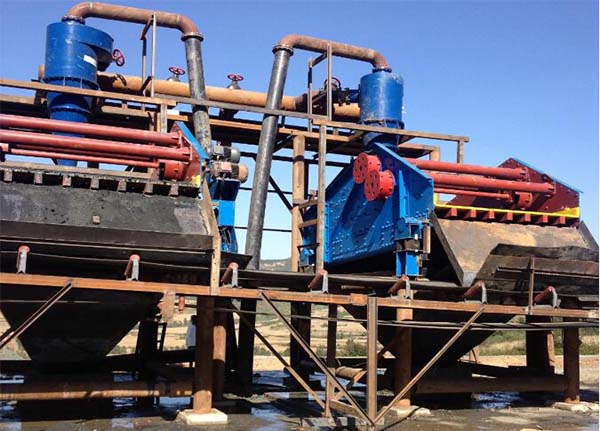
Gold tailings treatment and recovery usually adopt reasonable technology to re-select the tailings, so that the useful components in the tailings can be recovered to a limited extent, so that the number of tailings can be further reduced. Tailings are components that have a low content of useful components produced in beneficiation operations and cannot be economically used in industrial production at present and are also the main component of industrial solid waste. Common gold mine tailings treatment methods: 1. Gold tailings reselection The gold content in gold mine tailings is generally 0.2-0.6g/t. In addition to gold and silver recovery, the gold tailings re-selection process can also comprehensively recover other valuable elements according to the nature of the tailings. Therefore, tailings re-selection has become a major trend in the current gold mine tailings treatment. Take the recovery of lead and zinc from gold tailings as an example, the lead-zinc minerals in the gold concentrate have undergone fine grinding and long-term aeration and stirring during the cyanide leaching process, and severe over-grinding has occurred, which makes flotation difficult. In addition, a large number of argillaceous minerals and residual cyanide make a thin film on the surface of the mineral, so that the…
read more >>
The gravity thickening of sludge is mainly processed by the gravity sedimentation and solid-liquid separation of the high-efficiency thickener. The high-efficiency thickener can concentrate the slurry with a solids content of 10%-20% by gravity sedimentation into an underflow slurry with a solids content of 45%-55%. With the help of the slow-running rake in the thickener, the thickener underflow slurry is discharged from the underflow port at the bottom of the thickener. Gravity thickening of sludge process The thickener is mainly composed of a circular deep cone thickening tank and a rake scraper. The solid particles suspended in the slurry in the thickening tank settle under the action of gravity, and the upper part becomes clarified water, so that the solid and liquid can be separated. The sludge deposited on the bottom of the thickening tank is continuously scraped and collected by a rake scraper to the center of the bottom of the pool and discharged, while the clarified water overflows from the upper edge of the thickening tank. Flocculant effect The use of flocculants will affect the size and unity of the final group. Therefore, the mixing speed and the amount of medicament added must be determined according to the slurry concentration and…
read more >>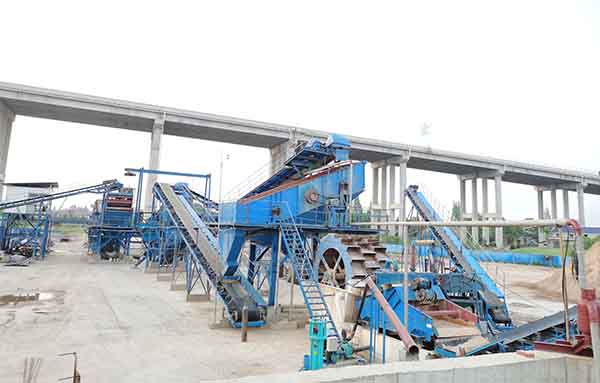
The crushed stone production line is equipped with a variety of equipment to complete the processing of various types of rocks, which can process stones into sand. The 300 tons crushed stone production line can complete crushing + sand making production for different hardness stones, which is convenient for users to choose a suitable crushed stone production line according to their actual conditions. How much is it? For high hardness stones For high-hardness stones, such as basalt, river pebbles, and other materials, when configuring the crushed stone production line, choose mechanical equipment with strong wear resistance and large crushing force. Main equipment 75 jaw Break, 1750 cone crusher, VSI9526 sand making machine, vibrating screen, belt conveyor, vibrating feeder Jaw breaking is mainly the primary crushing treatment of stone. The equipment has the characteristic of a large feed port, which is convenient for the simple crushing of large stones. Then the cone crusher performs the secondary fine crushing process into small stones with a particle size of less than 30mm. The sand that is not used as construction sand can be directly removed from the stone material processed by the cone crusher through a vibrating screen to obtain stones of uniform particle size and…
read more >>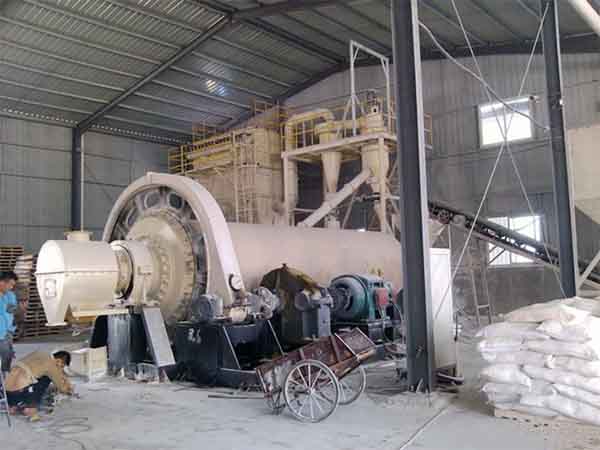
The impurity removal methods of potassium feldspar mainly include magnetic separation, flotation, acid leaching process, and combined process. Specifically, the appropriate impurity removal process should be selected according to the occurrence state of the impurity minerals and the particle size of the cloth. Potash feldspar often coexists with other impurity minerals. In particular, a small number of impurities such as iron and titanium elements affect its quality and application, so it needs to be treated with impurity removal. 1. Potash feldspar magnetic separation process Iron oxide, mica, and other weakly magnetic minerals in potash feldspar ore should be separated by strong magnetic separation. The commonly used magnetic separation equipment includes wet drum magnetic separator, vertical ring pulsating high gradient magnetic separator, and flat magnetic separator, which need to be determined according to the properties of the ore. In actual production, the magnetic separation effect of potash feldspar ore impurity reduction is mainly affected by the magnetic field strength of the magnetic separation equipment and the number of magnetic separations. The higher the magnetic field strength, the more times of magnetic separation, the less iron content of the ore, and the pulsating current can also improve the iron removal effect. It is recommended to…
read more >>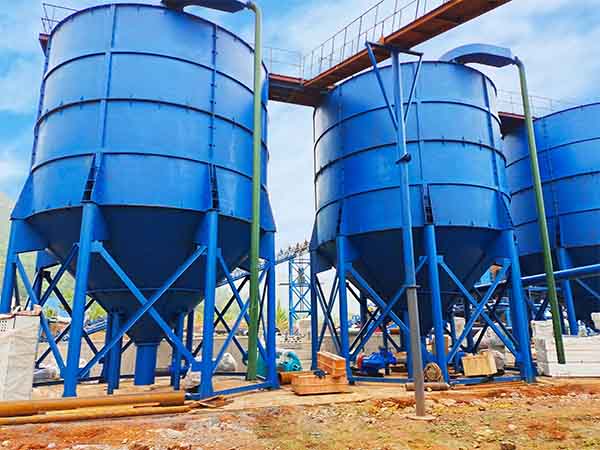
The thickener is one of the common equipment in the beneficiation plant, which can be used for dehydration, concentration, solid-liquid separation, drug removal, and other operations. The working principle of the thickener is to use the gravity of the solid particles to divide the slurry into two parts, the clarified liquid, and the high-concentration sediment. How to improve the sedimentation effect of the thickener is the key to improving the productivity of the thickener. 1. Using flocculants to improve concentration The size of the ore particles in the slurry is different. The sedimentation speed of the material in the water is related to the particle size. The finer the particle size, the slower the sedimentation rate. Some processes require relatively fine grinding particle size to achieve better sorting indicators. Therefore, how to effectively settle the fine material is the key to improving the precipitation efficiency of the thickener. The use of flocculants can solve the problem of fine material sedimentation. The flocculant can make the materials collide with each other to form flocs, increase the volume and increase the settling speed. 2. The feeding part affects the concentration effect The ore pulp enters the settlement zone through the feed barrel in the…
read more >>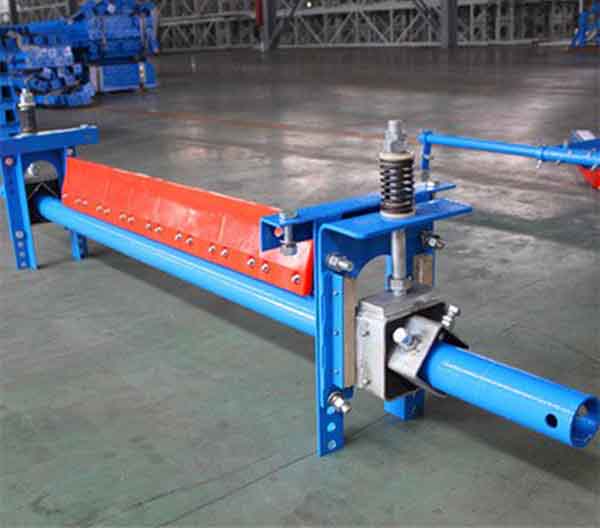
The belt cleaner is a cleaning device for the adhesion of the belt conveyor belt. The main function is to reduce the excessive wear of the conveyor belt and reduce energy consumption. What is the function of a belt conveyor cleaner? 1. Keep the conveyor belt clean, ensure that the conveyor belt has sufficient friction on the drive roller, and prevent belt slippage and deviation. 2. Effectively reduce the abrasion of the conveyor belt and rollers caused by viscosity and larger materials, and effectively extend its life. 3. Ensure that the conveyor belt runs smoothly. 4. Effectively protect the supporting rollers, brackets, driving rollers, and reversing rollers to ensure normal operation and reduce equipment maintenance rates. What factors can cause the belt conveyor cleaner to fail? 1. Inappropriate selection of cleaner The belt cleaners are divided into main types according to the structure: scraper type, rotary type, water spray type, brush type; According to the materials used, there are mainly: polyester ammonia cleaner, nickel-titanium aluminum alloy, alloy rubber cleaner; According to the working principle, there are mainly mechanical and electric. The selection of the cleaner should be based on the site conditions, and a sweeper that conforms to the working conditions should be…
read more >>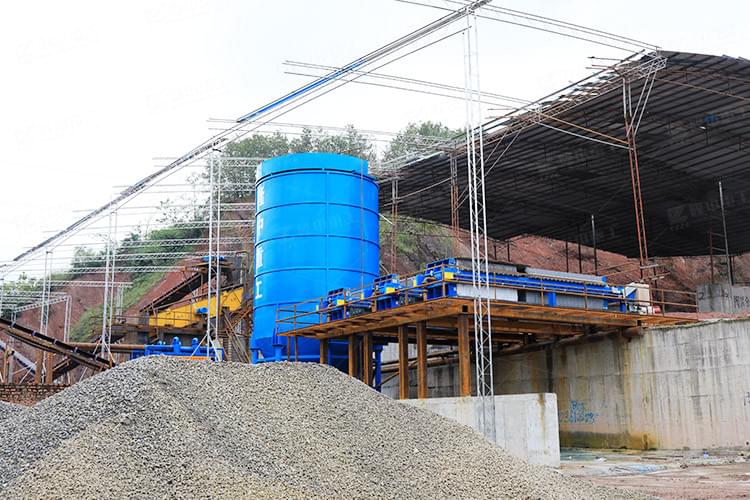
The thickener is a continuous working thickening and clarification equipment, mainly used in the liquid-solid separation process beneficiation tailings, leachate concentration, and wastewater treatment. In the beneficiation plant, the thickener is widely used in the thickening of pulp and tailings, so that the backwater can be recycled and the concentrate is dewatered before filtering. Thickeners can be widely used in the treatment of sludge, wastewater, and waste residues in metallurgy, mining, coal, chemical, building materials, environmental protection, and other industries. The thickener is important equipment for dehydration, drug removal, and washing in the process of beneficiation and chlorination in gold mines. The chlorination workshop needs multiple thickeners to complete the drug removal and washing operations. Underflow pulp concentration and pulp processing capacity are two important production indicators of the thickener. As the core equipment in the slurry concentration process, the thickener is an important ore processing and buffering facility. Because the underflow concentration and underflow flow of the thickener is directly related to the production indicators of the flotation workshop, ball mill workshop, and other related workshops closely connected with the thickener, the thickener has a very important position and function in the production process of the concentrator. The application of thickener in…
read more >> The thickener is a tailing or concentrates dewatering equipment commonly used in the mining industry, which is mainly used to separate the water to achieve the purpose of solid-liquid separation. The separated water can be reused, and the tailings can be directly piled-up or backfilled in the pit. Thickeners are widely used in the treatment of sludge, wastewater, and waste residues in metallurgy, chemical, coal, non-metallic mineral processing, environmental protection, and other industries. The non-compliance of environmental protection standards in the discharge of sand washing wastewater has always been a stumbling block hindering the development of sand washing plants. In order to meet environmental protection standards, sedimentation tanks are generally used for the treatment of sand washing wastewater. However, the construction of a sedimentation tank requires a lot of costs, and there must be enough space for stacking wet mud. On the other hand, the sedimented mud cannot reach a certain degree of dryness, and it is also very difficult to handle. Therefore, this approach is not recommended. The main feature of the thickener in mining is to add a certain amount of flocculant to the slurry to be concentrated. The solid particles suspended in the slurry in the thickening tank settle…
read more >> The gravity sludge thickener design for wastewater treatment plants of LZZG adopts a large-angle deep cone tank, which greatly improves the underflow concentration and overflow water quality. The high-depth gravity thicking tank design and the effect of flocculants accelerate the concentration process. The area is smaller and the degree of automation is higher. LZZG deep cone thickener has a smaller footprint and a higher degree of automation. The processing capacity is 3-8 times higher than that of the traditional thickener, and the underflow concentration is as high as 50-70%, which greatly meets the high concentration requirements of the concentrator and the concentration of other fine particles and low-density slurry. In the beneficiation process, most beneficiation plants use the wet separation process. However, the concentrate after this process has high moisture content and cannot be directly smelted. As the first step of dewatering operation, concentration operation has an impact of up to 9% on the overall beneficiation process and 35% on the entire dewatering operation. The concentration equipment will directly affect the dehydration effect. High-quality gravity sludge thickeners often increase the concentration of concentrate by 20%-30%, thereby enhancing the concentration effect. The gravity sludge thickening tank design 1. Lifting device The lifting device is mainly used to…
read more >>
The correct use and careful maintenance can prevent the bearing from heating and burning to improve the design and processing quality of the vibration exciter. The vibration exciter is the power source of the vibrating screen and is subjected to strong vibration and shock. Practical experience shows that the main bearing damages are as follows. 1.Design reasons A. Unreasonable design of lubrication seal structure Many vibration exciter bearings use grease lubrication and labyrinth seal structure, and the sealing gap is generally 1 to 2 mm. In actual use, as the temperature of the exciter bearing increases, the viscosity of the grease gradually decreases. The spindle rotates at a high speed, and the grease in the labyrinth cover continuously leaks from the labyrinth cover, which eventually causes the bearing to be damaged due to lack of lubrication. Solution: Use thin oil lubrication to improve the lubrication channel and improve the sealing structure. B. Improper fit between the bearing and the housing hole The matching tolerance of the bearing and the bearing seat hole is the focus of the design. Choosing a larger interference fit will force the shape of the bearing raceway to produce geometric deformation and abnormal vibration during operation. Choosing…
read more >>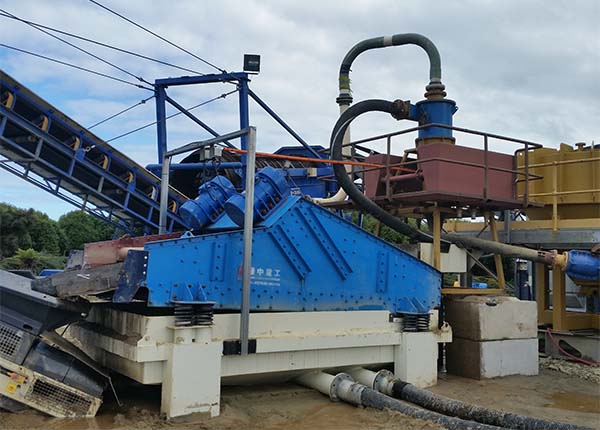
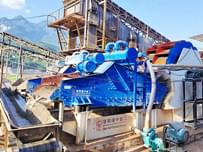
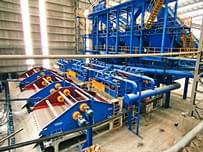
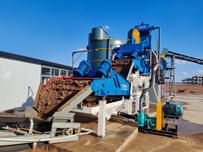
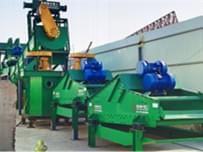
The high-frequency dewatering vibrating screen is a dewatering and screening equipment for slurry materials. Slag and water can be separated automatically. Continuous operation, free of manual operation. The application of the high-frequency dewatering screen in the slag-water separation process and the tailings treatment process of the beneficiation plant solves the problem of waste of mineral resources and large investment. The recycling of resources in the concentrator is realized, with low investment and high return, as well as energy saving and environmental protection. The application high frequency dewatering vibrating screen 1. Application of potash feldspar ore for dehydration after ball milling In a potash feldspar mine in Quanzhou, Fujian, the output of the ball mill is fed into the screw separator for slag-water separation. However, the water content of the finished material after separation is too high and cannot be dry piled. After inspection and experimentation, the high-frequency dewatering screen of our company was applied to replace the spiral separator. After being dehydrated by the high-frequency dehydration screen, the water content of the finished potassium feldspar is less than 15%, which fully achieves the dry heap effect. And the lost fine sand is also recovered, which increases the recovery rate of…
read more >>


Copyright © 2015 - 2026 Luoyang Longzhong Heavy Machinery Co., Ltd. Website Map | Privacy policy | Contact Us




Inquiry