

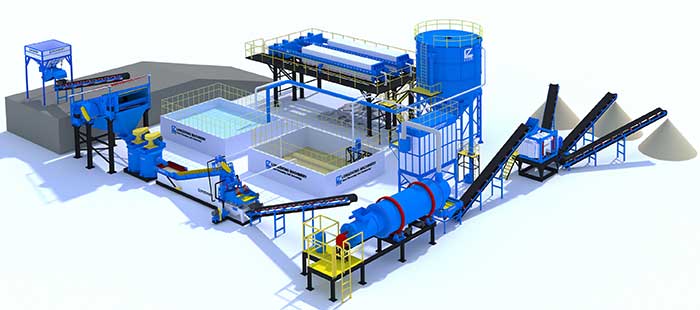
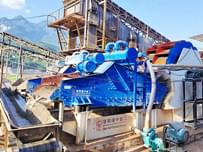
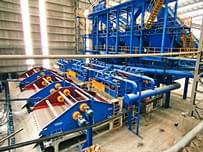
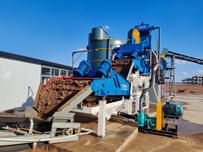
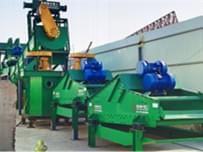
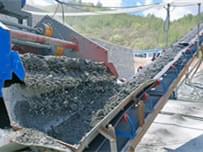
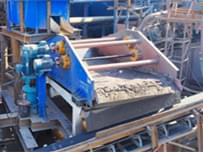
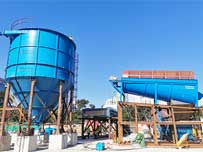
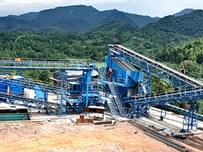
Overview: Frac Sand Production Line Frac sand (also called proppant) is a high-purity granular material engineered for hydraulic fracturing in oil and gas wells. Natural quartz sand accounts for about 80% of the proppant market worldwide, and roughly 96% in North America (fracturing silica sand). During stimulation, frac sand is pumped into the fracture with the fracturing fluid. When pumping stops and pressure is released, the sand grains act as tiny props that hold the fractures open. This keeps oil and gas flowing toward the wellbore, boosts reservoir permeability, and lifts well production. A complete frac sand production line must solve every key challenge — screening, impurity removal, washing, dewatering, drying, tail-water purification, and solid waste disposal. LZZG supplies full-set equipment for every stage above, alongside customized frac sand production process design and equipment selection services. Complete Equipment for 30 T/H Frac Sand Production Line Raw Material Feeding Vibrating feeder, belt conveyor Washing, Scrubbing & Classification Attrition scrubber, sand washing machine, hydrocyclone, linear vibrating screen, magnetic separator Finished Sand Drying & Screening Dryer, Swing screen Tailwater & Solid Waste Treatment High-efficiency deep cone thickener, high-rate thickener, sludge filter press Frac Sand Production Line Working Process 1. Raw Sand Storage & Pre-screening…
read more >>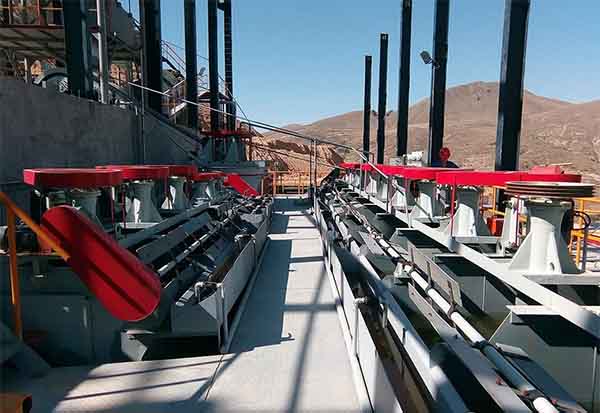
In the flotation practice, in order to overcome the deterioration of the flotation process by the fine mud and eliminate the harmful effects of the fine mud, the following measures are often used. Solution Fine mud can be divided into primary fine mud and secondary fine mud. The primary fine mud is the fine mud formed by the natural weathering of minerals in the deposit, such as fine mud as kaolin and clay. Secondary fine mud refers to the fine mud produced in the process of mining, handling, crushing and grinding. Generally, the primary fine mud is more difficult to float than the secondary fine mud. In order to reduce the harm of fine mud to the flotation process, it is necessary to reduce the secondary fine mud as much as possible. In the flotation practice, in order to overcome the deterioration of the flotation process by the fine mud and eliminate the harmful effects of the fine mud, the following three measures are often used. 1. Add a dispersant to reduce the impact When the fine mud is not too much, add a dispersant to reduce its influence. The dispersant is a pure electrolyte, and its function is to…
read more >> Flotation fine mud generally refers to a fine particle fraction of fewer than 10 microns or less than 5 microns. Production practice shows that if the material contains more fine mud, the flotation process will have seriously deteriorated, and the flotation effect will be significantly reduced. The production indicators will have the problems of low concentrate grade, low recovery rate, high chemical consumption, and high concentrate moisture. The following will introduce the reasons for the poor selection of fine mud in the flotation process. Reasons for the poor selection of fine mud in the flotation process The problem of fine mud flotation is related to the physical and chemical properties of fine mud, which is mainly reflected in the following three aspects. 1. Light weight The fine mud has a small mass and is difficult to collide with the air bubbles, and it is difficult to adhere to the air bubbles. However, fine mud is easily adhered to the surface of coarse grains, which acts as an "inhibitory" to the flotation of coarse grains, reduces the flotation of coarse grains, and deteriorates the selectivity of the flotation process. However, not all slime coverages are bad, the same composition of slime…
read more >>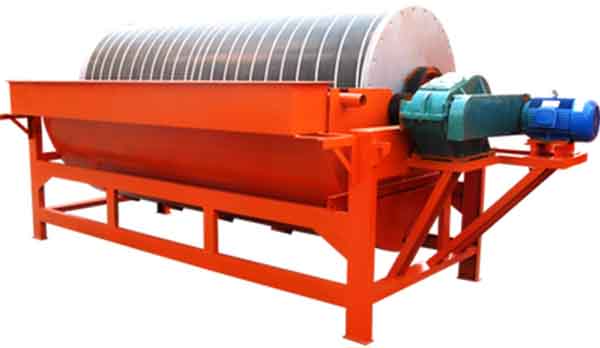
Magnetic separation is one of the main methods of iron ore beneficiation, and magnetic separator is the main equipment of this method. In actual production, the operation of the magnetic separator has a very obvious impact on the separation index of iron ore. The main operating factors are the thickness of the feed layer of the magnetic separator, the rotational speed of the magnetic separator cylinder, the feeding speed, and the water inlet control. 1. Feed layer thickness The thickness of the feeding layer is the feeding amount, which is related to the particle size and magnetic mineral content of the raw ore fed into the magnetic separator. Generally, the feed layer of coarse iron ore is thicker than that of iron-manganese ore. The thickness of the feed layer for coarse-grained iron ore should be about 1.5 times the upper limit of particle size, and for medium-grained or fine-grained iron ore, it can reach 4 to 6 times the upper limit of particle size. In the case that the content of magnetic minerals in the original iron ore is low, the thickness of the feeding layer should be appropriately reduced to avoid the magnetic ore particles located in the lower layer…
read more >>
Jig beneficiation mainly uses vertical alternating medium (usually water or air) flow to stratify ore particles according to relative density and collect light and heavy minerals separately through appropriate methods to achieve the purpose of sorting, which is to deal with coarse-grained ores with large density differences. One of the effective reselection methods. In the separation process, the technological factors that affect the jig separation mainly include the stroke, the number of strokes, the feed water, the supplementary water under the screen, the thickness of the bed, the composition of the artificial bed, the amount of feed and other factors that can be adjusted in production. And the granularity and density composition, bed thickness, sieve plate drop, jigging cycle curve form of feedstock with limited adjustable range. 1. Stroke The stroke is directly related to the looseness and looseness of the bed, and has a decisive impact on the jig sorting index. It needs to be determined according to the nature of the material being processed and the thickness of the bed. If the stroke is too small, the bed layer cannot be sufficiently loosened, and the high-density coarse particles cannot get a suitable space for transferring to the bottom…
read more >>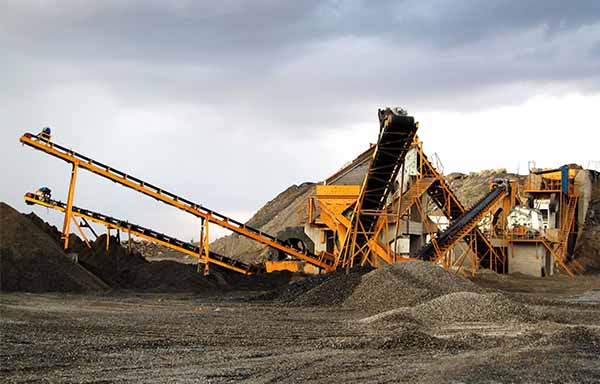
Belt conveyors are widely used in mining, metallurgy, coal, and other industries. Once a problem occurs, it will bring unnecessary trouble to the subsequent debugging and acceptance work, and it is easy to cause accidents such as deviation of the belt during production. So, the following lists the installation requirements of the conveyor belt. 1. Measurement Determine the longitudinal centerline of the conveyor, and the deviation from the actual axis of the foundation should be no more than ±20mm. After the axis of the drum is released, the projection line of the busbar is drawn out at the same time, so as to measure the perpendicularity of the drum to the longitudinal centerline during installation. The pay-off line of the drum and the frame should be perpendicular to the longitudinal centerline. 2. Tape holder installation The installation sequence of the tape holder is: first assemble the head frame, then install the tail frame, and finally install the middle frame. Before installing the rack, the center of the conveyor should be determined. It is an important condition for the normal operation of the conveyor belt that the centerline be in a straight line. All operating centers of the conveyor should be in…
read more >>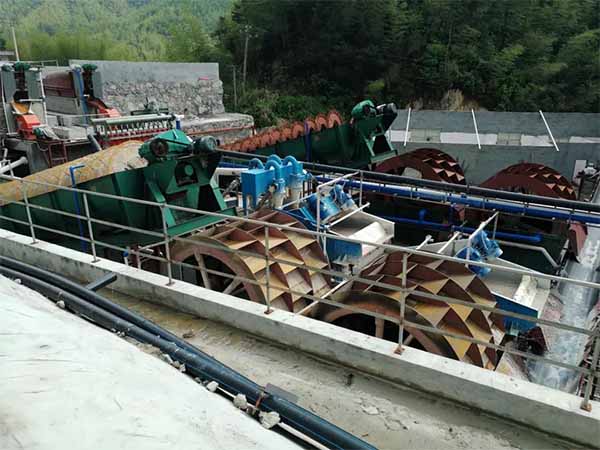
Iron removal and whitening is important way to improve the added value and application effect of kaolin. In general, the whiteness of natural kaolin is often reduced due to various impurities. Common impurities mainly include organic matter, iron, titanium, dark ore, and iron mainly affects the whiteness of kaolin. When calcined at high temperature, it will become Fe2O3, causing the raw material to turn yellow or brick red, affecting the quality of kaolin products. 1. Magnetic separation Kaolin ore usually contains a small number of iron minerals, mainly iron oxides, ilmenite, siderite, pyrrhotite, mica, tourmaline, etc. These colored impurities are usually weakly magnetic and can be removed by magnetic separation based on the magnetic difference with kaolin. For strong magnetic minerals such as magnetite, the weak magnetic separation method can achieve ideal results. Weak magnetic minerals need to use a high gradient strong magnetic field magnetic separation method. This method can effectively remove weak magnetic fine particles and even colloidal particles in useful minerals, and at the same time separate micron-scale paramagnetic materials. The magnetic separation purification process solves the problem of the development and utilization of low-quality kaolin resources that have no mining value due to high iron content.…
read more >>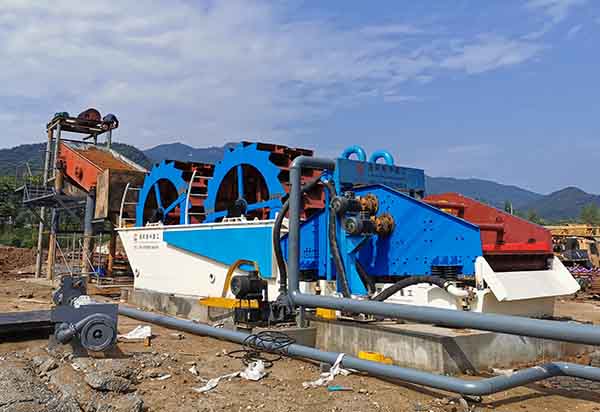
The system of sand washer+hydrocyclone separator can remove fines from sand effectively. The combination of sand washer and sand recovery unit is commonly used in sand crushing plants and sand processing plants. The hydrocyclone is a high-efficiency grading and desliming equipment. Because of its simple structure, convenient manufacture, large processing capacity, and obvious effect, it has been widely valued and used at home and abroad. The sand washing machine can clean the stone powder and mud powder in the machine-made sand at one time, which greatly improves the quality of the machine-made sand, so that the machine-made sand reaches the standard of construction sand. Sand washing machine is one of the indispensable equipment for the sand production line. It has the characteristics of a high cleaning degree, large processing capacity, low energy consumption, less sand loss, saving water resources, and no pollution. LZZG sand washing equipment is a high-efficiency sand washing equipment developed and produced by using advanced technology at home and abroad, combined with the actual situation of the domestic sand and gravel industry, and has three functions cleaning, dehydration, and classification. It adopts a new structural design, and the impeller drive bearing device is isolated from water and…
read more >>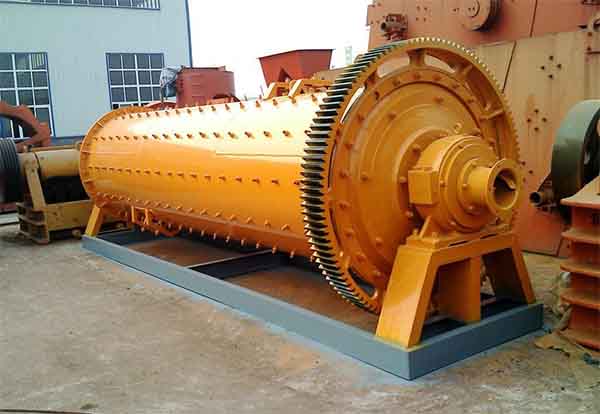
As an important part of the ball mill, the ball mill liner can not only effectively protect the ball mill barrel, but also enhance the impact and grinding between the medium and the material, thereby improving the grinding efficiency. In the production process, many ball mill linings wear too fast under the long-term action of the grinding medium. So, what are the reasons for the rapid wear of the ball mill liner? How should it be solved? 1. Mutual wear between the liner and the steel ball Ball mill liner and steel balls are wearing parts. During the grinding process, the steel balls and materials of the ball mill make a parabolic falling motion in the cylinder. At this time, the lining plate of the ball mill, the steel balls, and the materials will collide with each other to produce friction. In continuous operation, the lining plate and steel ball of the ball mill will be seriously worn, which is directly related to the hardness of the material. The greater the hardness of the material, the faster the wear rate of the ball mill liner and steel balls, which may cause equipment damage or even safety accidents in severe cases.…
read more >>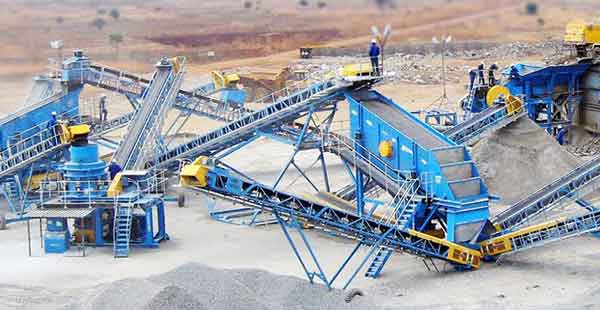
The following mainly combines the common types of tape tearing in the previous article, analyzes the reasons for tearing, and takes targeted prevention measures, which is of great significance to the safe and efficient production of mines. Preventive measures for tape tearing 1. Tape interface transverse tear control measures A. When the adhesive tape interface is glued, control the vulcanization temperature and vulcanization pressure. B. Leave a suitable length at the interface, too short will directly affect the tensile force of the interface. C. Glue strictly in accordance with national standards, and keep the interface clean and dry during the process of gluing. 2. Preventive measures for longitudinal tearing of the tape A. Control the entry of large pieces of iron ore, iron parts, and parts that fall off equipment at the source of materials. B. A grid screen is installed at the feeding port, and facilities and equipment such as an iron remover are installed at the discharge port to remove large foreign objects, which can prevent sharp objects from scratching the tape and jamming tape. C. According to the angle of repose of the material, the outlet of the guide trough is inclined at a certain angle along…
read more >> In addition to normal wear and tear of the tape during operation, the tape may also be torn due to other unfavorable factors, causing the conveyor to fail, affecting normal production, and may lead to huge economic losses in severe cases. The following introduce 4 types of belt conveyor tape tear forms. Common forms and causes of tape tearing 1. Tape joint torn There are two main ways to connect the tape, one is the vulcanization connection method, and the other is the mechanical connection method. At present, vulcanized joints with relatively good wear resistance are mainly used, but their pressure resistance is poor. In the process of use, corrosion is often caused by materials such as mineral powder covering the steel wire and rubber material until the rubber is opened. Tape joints may also be worn, peeled, glued, cracked, etc. due to substandard materials used or lax implementation of vulcanization process standards. If these problems are not dealt with in time, the material will continue to erode and under the action of the roller friction, the joint part will be damaged and deteriorated faster, the crack will continue to expand, and the strength of the tape will continue to decrease, resulting in…
read more >>
Commonly used manganese beneficiation methods mainly include mechanical beneficiation methods (washing, screening, gravity separation, strong magnetic separation, and flotation) and chemical beneficiation methods. Most manganese ores are fine-grained or fine-grained and contain a considerable amount of high phosphate ore, high iron ore, and symbiotic beneficial metals, which brings great difficulty to beneficiation and processing. 1. Ore washing and Screening Manganese ore generally contains slime, which will affect the grade of manganese ore and worsen the effect of subsequent beneficiation (flotation, gravity separation, and magnetic separation). Therefore, the sludge must be removed by washing the ore first. Ore washing is the separation of ore and mud by hydraulic flushing or additional mechanical scrubbing, which is mostly used as a pretreatment operation before beneficiation. Manganese carbonate ore is generally sprayed with a vibrating screen. The products on the sieve are washed ore, and the products under the sieve are combined with the products on the sieve after spiral classification, and the overflow is discarded or the manganese minerals are further recovered. Manganese oxide ore is generally washed one or more times by a double-spiral trough washing machine with strong scrubbing. 2. Gravity selection method Gravity beneficiation is carried out according to the density and particle…
read more >>


Copyright © 2015 - 2026 Luoyang Longzhong Heavy Machinery Co., Ltd. Website Map | Privacy policy | Contact Us




Inquiry