

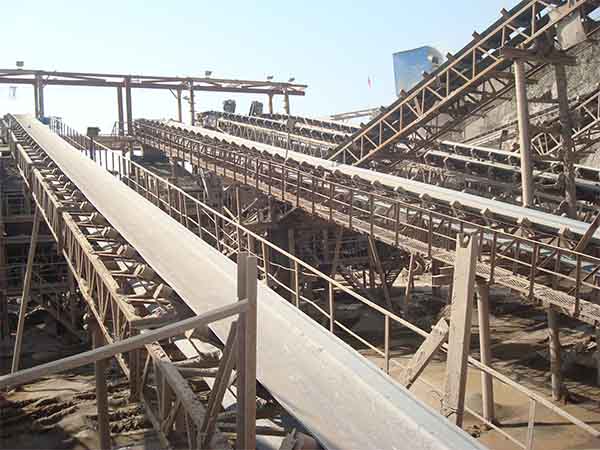
Belt conveyors are used in various industries because of their large conveying capacity, stable operation, and easy operation and maintenance. This article proposes 5 common reasons for the cracking of belt conveyor belts and gives solutions for reference. Reasons for cracking of belt conveyor belt 1. Tape material The material and manufacturing process are important factors that affect the tape service life and cracking. 2. Hard object scratches Belt conveyor belt cracking is generally accompanied by the entry of hard objects and iron pieces. For example, sharp stones and steel brazing fall into the middle of the tape, and the tape is torn during operation. The steel structure of the feeding hopper above the tape rack is cracked, and the tape is scratched by desoldering. 3. The idler does not rotate The belt conveyor idler does not rotate, causing sliding friction between the belt and the idler. The roller skin was worn through, leaking metal thorns, tearing the center of the tape apart. Or clay, sandstone, and wet powder adhere to the lower roller, forming a cam in the center of the roller. Over time, the raised adhesive only rubs against the center of the tape, leaking out the inner sail line, and…
read more >>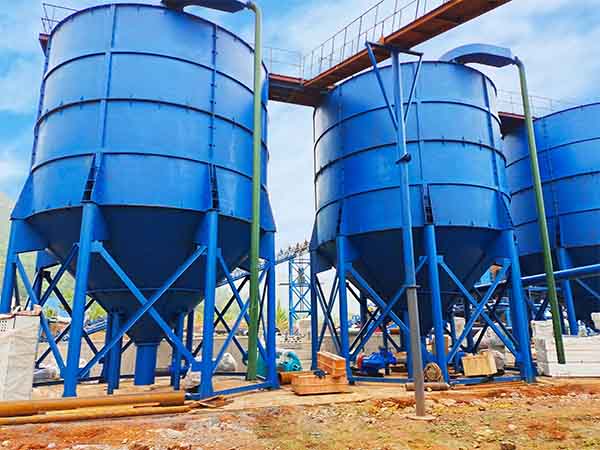
Thickener is used as concentrate and tailings dewatering treatment equipment. If abnormal vibration occurs, it will directly affect the daily production of the concentrator. The deviation of the verticality of the central column of the thickener, the deviation of the horizontality of the drive device, the unsynchronized drive mechanism, and the damage to the drive gear or bearing may cause abnormal vibration of the thickener. The thickener should be checked from these four aspects to find the cause of the vibration and formulate the corresponding solution. 1. Thickener center column verticality deviation The deviation of the verticality of the central column of the thickener will directly lead to the inability of the thickener rake to run horizontally and evenly. After the central column is inclined, the rake frame is inclined as a whole. In the process of rotation, it is in a state of high and low, and it is easy to produce abnormal noise and vibration of the thickener. This type of vertical deviation can also cause uneven stress on the thickener drive gear. Long-term operation in this condition is prone to abnormal noise, and the problem of damage to the drive gear may also occur. Detection method Drain the thickener.…
read more >>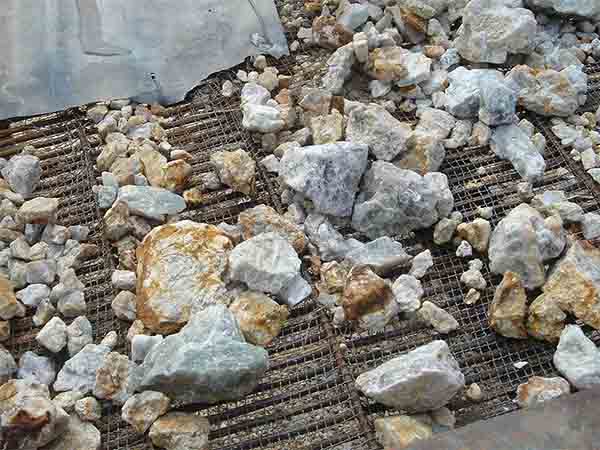
The purification of silica sand is mainly manifested in the effective removal of impurities containing iron and aluminum. According to the impurity components of silica and the occurrence state of inclusions on the surface of silica, the purification process is mainly divided into scrubbing, magnetic separation, flotation, acid leaching, etc. 1. Silica scrub purification A.Mechanical scrubbing Mechanical scrubbing is a process of removing the thin film iron and other impurities on the surface of the ore particles through the frictional collision between the equipment and the silica ore particles. Silica scrubbing pulp concentration between 50-60% can obtain a good purification effect. B. Stick scrubbing The rod friction scrubbing process can strengthen the scrubbing effect, and change the particle size of silica minerals, which provides a mineralogy basis for further selection of silica. C. Medicated scrubbing The electric repulsion between the silica and the surface of the impurity mineral particles is increased by adding a drug, and the separation effect between the mineral particles is enhanced. D. Ultrasonic scrubbing The secondary iron film is the main reason that the silica sand iron is too high and difficult to purify. The process utilizes ultrasonic waves to remove the secondary iron film and impurities on…
read more >>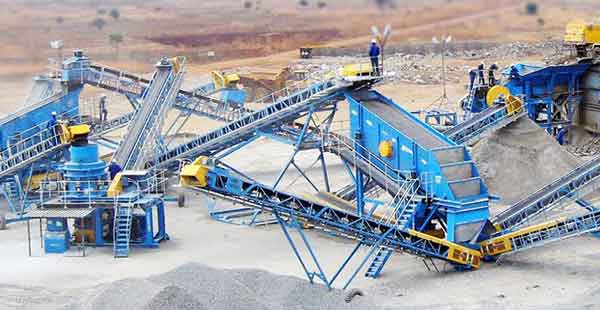
The beneficiation process of quartz sand is generally crushing-grinding-classification (desliming)-magnetic separation. Pickling is required when there are complex impurities. Quartz sand is a kind of non-metallic mineral, which can be widely used in making glass, producing metallic silicon, organosilicon compounds, etc. Quartz sand is divided into natural sand and artificial sand. The beneficiation process of natural sand does not require crushing and grinding. The following will introduce the quartz sand beneficiation process and equipment. 1. Quartz sand crushing process The Quartz sand crushing process mainly includes two to three stages according to the size of the original ore particle size, namely coarse crushing and fine crushing, or coarse crushing, medium crushing, and fine crushing. Quartz sand crushing equipment Jaw crusher, cone crusher, impact crusher, hammer crusher, roller crusher 2. Quartz sand wet grinding-classification process The grinding operation is to further dissociate the quartz minerals to achieve the particle size required for the production of glass. The grinding and grading operation of quartz sand often adopts a one-stage grinding and grading operation. The crushed and qualified materials enter the rod mill for grinding. The ground fine-grained materials are fed into a desliming bucket for desliming and dehydration, and then fed into a cylindrical screen for…
read more >>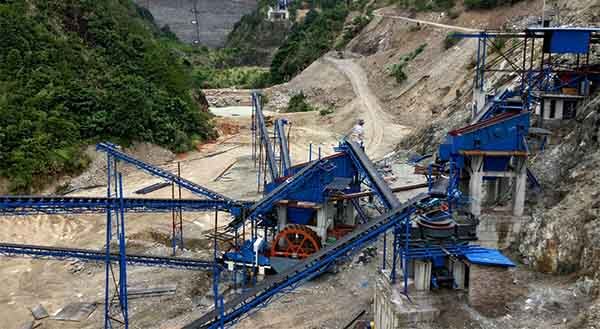
Taking a customer's production site as an example, this paper focuses on the process design and equipment configuration of the machine-made sand and gravel aggregate production line. Process design The raw material is dolomitic limestone with an average compressive strength of 94MPa. The design capacity is 400t/h. The front end of the production line adopts the crushing and screening process of jaw crusher + cone crusher + vertical shaft crusher + finished screening, and the back end adopts the sand washing and dehydration process. Equipment configuration 1. Coarse crushing equipment In aggregate production, impact crushers, hammer crushers, jaw crushers, and gyratory crushers are the more common primary crushing equipment. 2. Feeding equipment The feeding equipment mainly adopts bar feeders or heavy plate feeders. 3. The stockpiles in the middle of the production line The intermediate stockpile after coarse crushing can be divided into front and rear sections with different operating rates. When the front-end equipment cannot operate normally due to mine supply, road transportation, equipment maintenance, etc., the latter-stage equipment can continue to produce by relying on the material stored in the intermediate stockpile. 4. Screening equipment Through the vibrating screen, materials smaller than the medium crushing discharge particle size are…
read more >> The automatic control system of underflow ore discharge of thickening tank and automatic control system of flocculant addition plays an important role in practical application. In the following, the application of automatic control of underflow ore discharge and control of flocculant addition is introduced in combination with the actual situation, which has played a good role in field application. Thickener is one of the large-scale process equipment commonly used in mining and metallurgical industries. The function of the thickener is to separate the slurry from solid and liquid, so as to achieve the purpose of obtaining its overflow supernatant or underflow concentrated ore slurry. High-efficiency thickeners are widely used due to their small footprint, low energy consumption, and high efficiency. Among them, the automatic control of underflow ore discharge and the automatic control of flocculant addition is very important. 1. Automatic control of underflow ore discharge in thickener The thickener underflow control system achieves the purpose of changing the underflow discharge speed by controlling the underflow variable frequency slurry pump speed. The higher the rotating speed of the slurry pump, the larger the amount of ore discharged and the shorter the time of slurry settling. The lower the rotating speed, the smaller the amount…
read more >>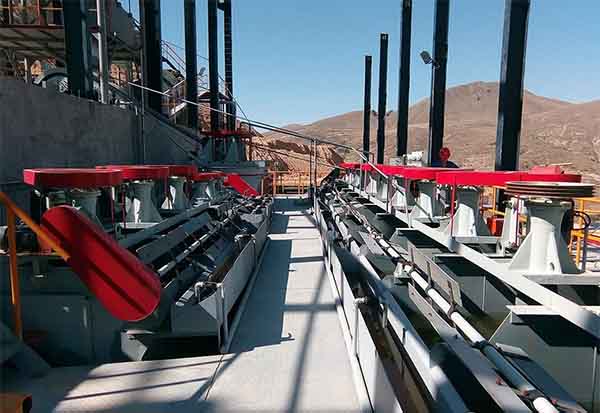
The geological structure of laterite nickel deposits is relatively complex, and the nickel content and mineral composition of different deposits are quite different. It is difficult to enrich by traditional beneficiation methods. At present, the beneficiation methods of laterite nickel ore include nickel-sulfur process, rotary kiln-submerged arc furnace process, sintering-blast furnace reduction process, direct reduction process, acid leaching process, etc. The above-mentioned laterite nickel ore beneficiation is greatly restricted by the power supply, and there are problems such as high investment and high pollution. The use of chemical beneficiation processes such as acid leaching for laterite nickel ore beneficiation is the beneficiation direction of laterite nickel ore. Longzhong Heavy Industry conducts research on different types of laterite nickel ore, and adopts normal pressure acid leaching, pressure acid leaching, normal pressure + high pressure combined acid leaching to treat laterite nickel ore, and a good beneficiation effect can be obtained. 1. Atmospheric pressure acid leaching of laterite nickel ore Atmospheric pressure acid leaching is suitable for treating laterite nickel ore with high magnesium content, and sulfuric acid and hydrochloric acid are generally used as leaching agents. During the treatment, the laterite nickel ore is first ground into a certain concentration of ore slurry, and a…
read more >>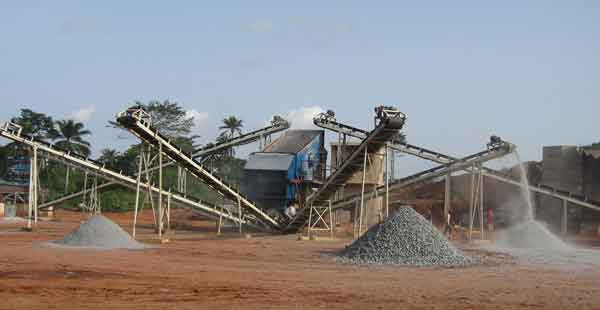
A cement plant in Jiangxi Province uses limestone mines as raw materials to produce ordinary Portland cement clinker. The annual output is required to be 3 million tons, 1.2 million tons of machine-made sand, 150,000 tons of stone powder, and the output of the machine-made sand table is 2*100t/h. 1. Technological design A.Crushing system The first-stage crushing adopts the hammer crusher, the feeding particle size is less than or equal to 1000mm, the discharging particle size is less than or equal to 31.5mm, accounting for 70%, and the crushing capacity is 1000t/h. The secondary crushing adopts an impact crusher, which is used to crush the primary crushing material. Feed particle size ≤ 800mm, discharge particle size ≤ 31.5mm90%, crushing capacity: 600t/h. B. Screening and conveying systems The content of mountain soil and rock crevice soil in the raw materials is relatively high, and a desilting process must be adopted. C.Main equipment of production line The equipment of hammer crusher + impact crusher is adopted. 2. Production line process A. The limestone is fed into the first-level single-stage hammer crusher or heavy hammer counterattack crusher by the feeder. According to the mud content of the raw material, the leakage material can be selected…
read more >>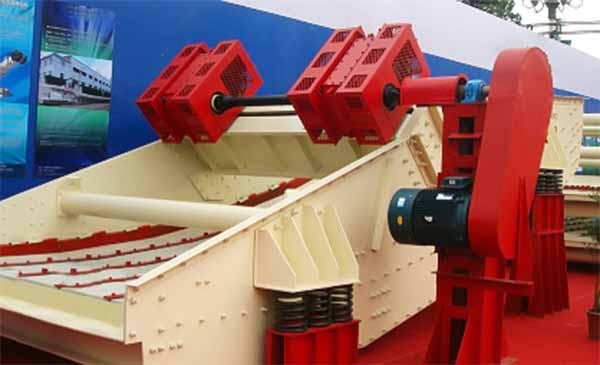
The exciter is the core component of the vibrating screen. Under the action of the vibration exciter, the materials are continuously loosened, layered, and screened on the screen surface to complete the screening operation. The commonly used exciters for vibrating screens mainly include electromagnetic exciters, vibration motors, self-synchronizing exciters, and forced synchronizing exciters. 1. Electromagnetic vibrator The exciting force of the electromagnetic exciter only acts on the screen surface, and the screen box does not participate in the vibration. It effectively reduces the vibration participating quality of the screen machine, improves the reliability of the screen machine, and reduces energy consumption. Electromagnetic exciters are mainly used on small vibrating screens for dehydration of materials. In the coal washing and processing industry, the electromagnetic high-frequency screen taps the screen at a frequency of 50Hz, which effectively solves the problem of blocking holes and improves the dehydration efficiency. 2. Vibration motor An eccentric block is installed on the output shaft of the vibration motor, and a certain centrifugal force is generated when the eccentric block rotates. The vibration motor is installed on the drive beam, and the vibrating screen can realize linear vibration or circular vibration with a reasonable arrangement. The excitation force can be adjusted…
read more >> The banana vibrating screen is a linear vibrating screen with a box vibrator and multi-section screen surface with different inclination angles. The shape of the screen box is similar to that of bananas. The banana screen is mainly used for particle size classification of large and medium-sized materials with high fine particle content, and can also be used for dehydration, de-intermediation, and desliming operations. The Banana vibrating screen is designed with the proprietary technology of injecting a banana-shaped multi-segment screen surface on a linear vibrating screen. The feeding end is a large inclined screen surface, and then descends step by step at a certain number of angles until the discharge port is reached. The sloping screen surface at the feeding end enables higher screening speed and thinner material stratification when more materials pass through the screen surface. Large pieces of material travel faster through steep slopes, and this earlier stratification brings finer particles closer to the screen surface more quickly, allowing them to pass unhindered through the gaps. The banana vibrating screen has the characteristics of extremely high screening efficiency and 1.5-2 times the processing capacity higher than that of the traditional grading screen. It is an advanced and popular screening…
read more >>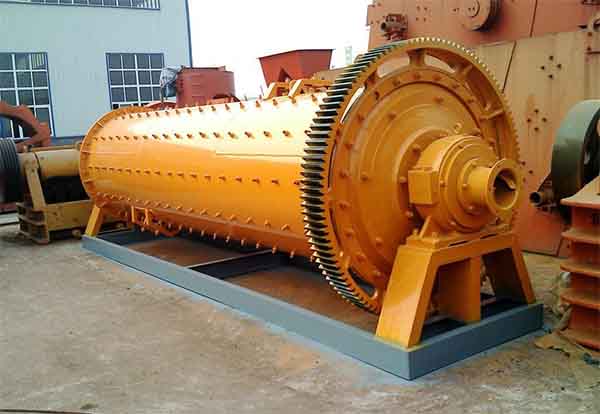
In a concentrator, grinding is an important factor affecting the economic indicators of the production process and operating efficiency. The impact of the grinding medium on the grinding efficiency and product quality is obvious, and it is easy to adjust. The following lists the influence of ball mill grinding medium on grinding efficiency from three aspects: medium filling rate, medium material, medium size, and ratio. 1. Medium filling rate of ball mill The medium filling rate refers to the ratio of the volume of the medium added to the mill to the volume of the inner chamber of the ball mill, which determines the strength of the grinding effect. The more balls are loaded, the more blows, the larger the grinding area, the stronger the grinding effect, and the higher the productivity, but the power consumption is also high. 2. Medium material of ball mill Ball mills consume a large amount of grinding media, and it is of great economic significance to improve wear resistance and prolong media life. At present, the materials of grinding media are mainly metal materials, including steel media, alloy steel media, cast iron media, etc. Subdivided into low-chromium cast balls (0.5-2.5% chromium, 1.8%-3.2% carbon), medium chromium cast balls (3%-7%…
read more >>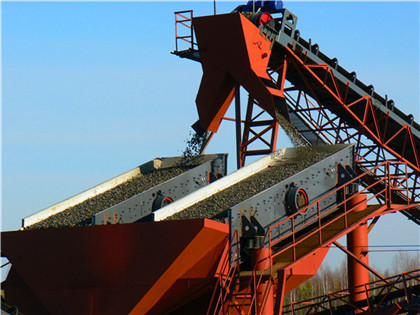
The power transmission of the crusher includes motor-V-belt-pulley drive, motor-coupler-gearbox drive, motor-(gearbox)-V-belt drive, motor-coupler-gearbox-meshing gear drive, etc. There are many forms, but they can be generally divided into two categories, V-belt drive and gearbox drive. The following compares the two crusher transmission modes from various aspects. 1. V-belt drive The V-belt drive is a widely used form of mechanical transmission. The V-belt drive uses the V-belt tensioned between the driving pulley and the driven pulley as an intermediate flexible member and transmits power through the frictional force generated between the V-belt and the contact surface of the main driven pulley. Technical Feature A. V-belt drive crusher belongs to powerful crushing equipment. Before the V-belt slips, the bulk materials are forcibly sheared, squeezed and crushed, which can well guarantee the product particle size. B. Compared with the traditional toothed roller crusher, the transmission link of the V-belt drive crusher is provided with a safety pin protection device. When the belt is overloaded or about to slip, the safety pin can be automatically cut off to protect the motor and the V-belt. C. The structure of the transmission link of the V-belt is simple, and the energy consumption of the intermediate link…
read more >>


Copyright © 2015 - 2026 Luoyang Longzhong Heavy Machinery Co., Ltd. Website Map | Privacy policy | Contact Us




Inquiry