

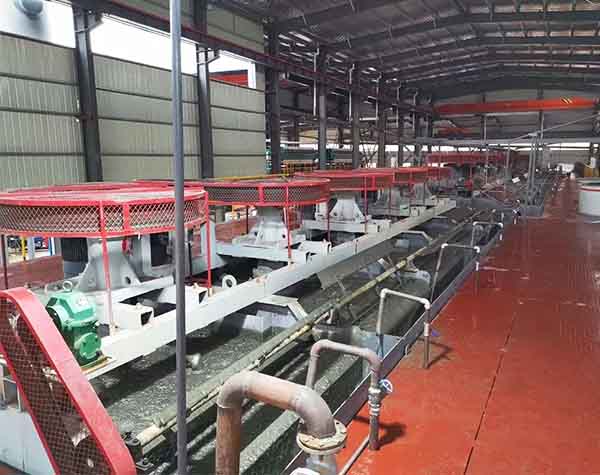
Flotation is one of the commonly used beneficiation methods in gold concentrators. But in the process of gold flotation, some gold ore raw ore has a large mud content, which affects the flotation effect. Therefore, how to reduce the effect of slime on gold flotation has become a widely concerned problem. To solve these problems, it is necessary to adopt corresponding solutions according to different gold ore properties to mitigate and prevent the harmful effects of ore slime. Strengthening fine flotation means adopting suitable process flow or using targeted flotation agents. Specific measures are as follows. 1. Ore washing Ore washing is an important method to eliminate the influence of slime on flotation. After a stage of crushing, add a vibrating screen to wash ore, and the ore is washed to remove the mud part. The screened slime is processed by spiral classifier, and the sand is returned to the silo or directly ground. The graded overflow can be flotation with the grinding products or flotation alone. The graded overflow with very low gold grade can be discharged directly with the tailings. 2. Part of the slime can be separated by hydrocyclone before flotation If the gold content of the slime is high, the slime can be treated…
read more >>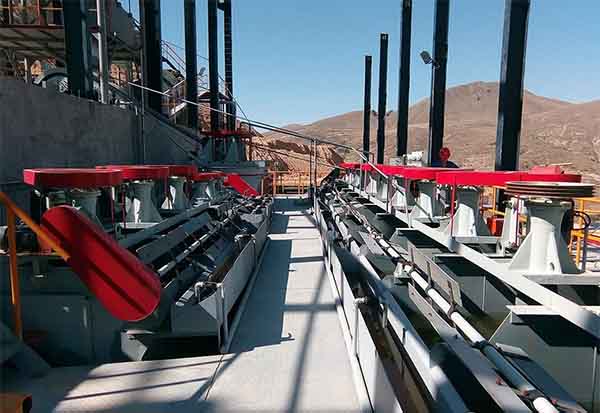
Flotation machine is one of the main equipment used for separation in concentrator. In the actual production, the flotation machine will encounter a variety of problems, such as screw falling off, groove bottom wear, impeller cover wear or corrosion, scraper mechanism is not flexible, bearing clearance becomes larger and so on. These faults not only affect the normal operation of the flotation machine, reduce the service life of the flotation machine components and flotation efficiency, but also aggravate the material consumption of flotation machine parts and increase the intensity of maintenance work. 1. Flotation machine cover or screw fall off During the operation of the flotation machine, the rotating impact and vibration will make the cover or screw of the flotation machine fall off, and then affect the normal operation of the flotation machine. The solution Before starting the flotation machine and in the process of daily maintenance, check whether the bolts of each part are tight. If it is damaged, replace it in time. 2. Flotation machine tank bottom wear or corrosion In the long-term operation, the slurry in the flotation machine tank is strongly rotated by the flotation machine, and the tank under the flotation machine is seriously worn and…
read more >>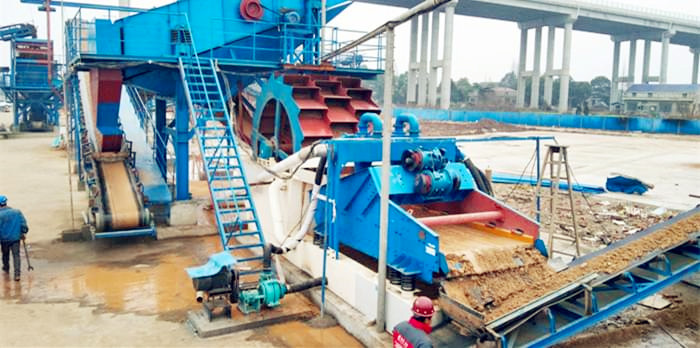
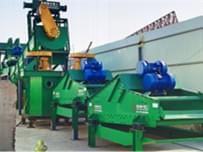
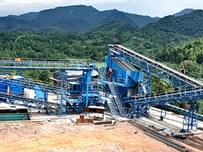
The production line adopts fully enclosed structure from crushing sand, screening water washing, sewage zero discharge and storage, and dust collecting pipes are arranged at dust points throughout the system to avoid dust spilt and realize environmental protection production. The raw material for the production of cave slag processing gravel. The project uses a complete set of water washing sand sewage treatment system, which can achieve high environmental protection and low energy consumption, ensure the production of high-quality aggregate machine-made sand, and promote the recycling of water resources and waste. The project address: Jakarta, Indonesia Capacity:300t/h Equipment configuration XSD1828 impeller sand washing machine, TS1836 linear sand dehydration screen, G500 plate and frame type filter press, S8045 sewage settling tank, vibrating screen, cloth bag filter and other equipment The production line advantages 1. The product line has reasonable gradation and good dehydration effect, which can meet the high standard demand of sand and stone aggregate for high-speed railway construction. 2. The screening process is washed with water, the follow-up link does not produce dust, good environmental protection effect. The sewage and sludge are processed by the filter press. The moisture content of finished mud cake is low, which is basically controlled at…
read more >>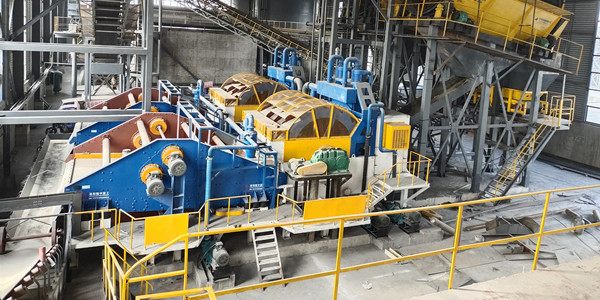
Slag treatment is a process of screening, crushing, impurity removal, magnetic separation, non-ferrous metal separation, tailings recovery, waste water treatment by using the difference in physical characteristics between ash and slag components to realize the recovery of iron, copper, zinc and other valuable metals. Preparation of recycled block from slag after separation. The main components of the slag produced by waste incineration power generation include molten slag, glass, ceramics, stones and other objects, most of which have the appearance of porous, light gray sand and stone. The project is located in Australia and has an annual capacity of 100,000 tons of waste incineration slag. The production line ensures that there is no secondary pollution in the process of slag treatment, and realizes fine sand recovery, tail water purification and reuse, and secondary utilization of solid waste dry discharge. The separated finished sand is made into environmentally friendly unfired bricks for sale. Equipment configuration The project uses LZZG sand dehydration screen ZSD2160, wheel washing machine XSD3620, chamber filter press G500-160. The processing capacity is 120-150t/h. Slag pretreatment process requires multiple equipment to work with each other to refine the slag treatment. Processing 1. Screening The drum screen is used to divide…
read more >>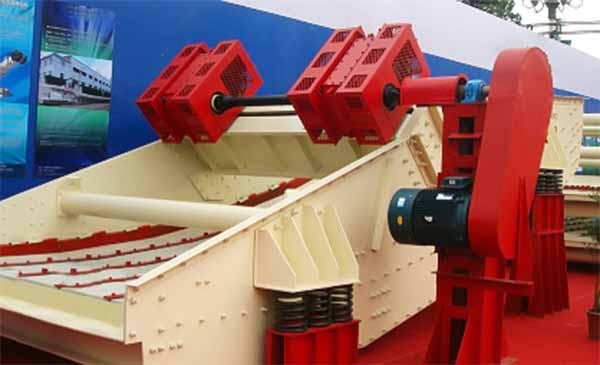
The motion parameters that affect the screening efficiency of the linear vibrating screen mainly include the inclination angle of the screen surface, the vibration direction angle, the amplitude of the screen surface, and the vibration frequency. 1. Screen inclination The inclination of the screen surface mainly depends on the required processing capacity and screening efficiency. When other parameters are determined, the larger the inclination angle, the higher the processing capacity, but the lower the screening efficiency, and vice versa. When the linear vibrating screen is used to screen materials >50mm, the inclination angle of the screen surface is generally 5-10°. When the linear vibrating screen is used to screen medium and fine-grained materials less than 40mm, the inclination angle of the screen surface is 0°. When the linear vibrating screen is used for dehydration, de-intermediation, and desliming, the inclination angle of the screen surface is -5-0°. 2. Vibration direction angle The vibration direction angle of the screen surface of the linear vibrating screen is the projection angle of the material. In actual production, most linear vibrating screens use 30°, 45° and 60° vibration direction angles, which can not only better adapt to various screening performances but also obtain ideal moving speed and…
read more >>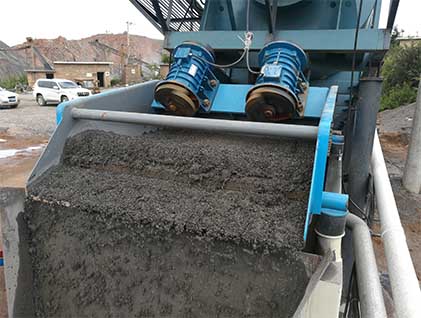
The linear vibrating screen is common screening equipment in beneficiation production, and its screening efficiency affects the quality of the final product. The factors affecting the screening efficiency of the linear vibrating screens include material properties, motion parameters, equipment performance, and daily operation and management. Usually, the material properties that affect the linear vibrating screen efficiency are mainly reflected in the particle size, moisture, mud content, and shape of the material. 1. Particle size The existence of "easy-to-screen particles" and "difficult-to-screen particles" in the material to be screened has a significant impact on the screening process of the linear vibrating screen. In general, the more "easy-to-screen particles", the better the screening efficiency of the linear vibrating screen. Since the "easy-to-screen particles" can easily pass through the sieve holes, the materials remaining on the screen are rapidly reduced, thereby greatly reducing the interference factors of difficult-to-screen particles passing through the screen. 2. Material moisture There are three types of material moisture: water tightly bound to the material; adsorbed water that widely exists in the pores and cracks of the material; extrinsic water adhering to the surface of the material. In the dry screening process, the material moisture that affects the linear vibrating screen screening process…
read more >>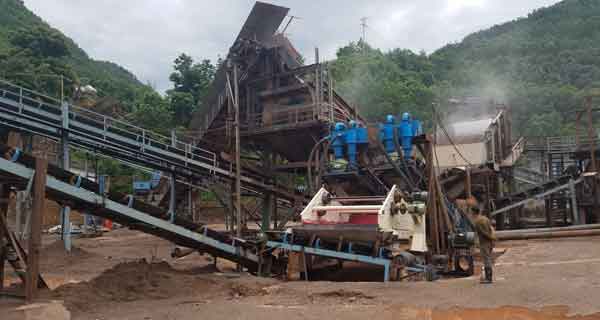
The tailings dry discharge process is to dewater the tailings through multiple stages to form tailings slag with a small water content, which can be stored or transported in the form of dry slag. In production, mineral composition, specific gravity, concentration, particle size, and distribution are also different. Tailings can be divided into coarse particle size tailings, medium, and fine particle size tailings, and ultra-fine particle size tailings. So it is necessary to select a suitable dry tailings discharge process for tailings slurry with different particle size distributions. 1. Coarse particle tailings dry discharge process Coarse particle size tailings slurry refers to solid particles > 0.075mm. The dry discharge process often adopts a two-stage concentration-dehydration scheme, that is, a cyclone + a dehydration screen + a thickener. The tailings dry discharge process utilizes dewatering screen for dewatering, which reduces filter equipment. The final tailings moisture content is 12-15%. 2. Medium and fine particle tailings dry discharge process Medium and fine particle size tailings slurry refers to solid particles = 0.075-0.023mm. The dry discharge process often adopts a two-stage concentration-dehydration-filtration scheme, that is, a cyclone + a dehydration screen + a thickener + filter press. The tailings dry discharge process utilizes a cyclone and a…
read more >>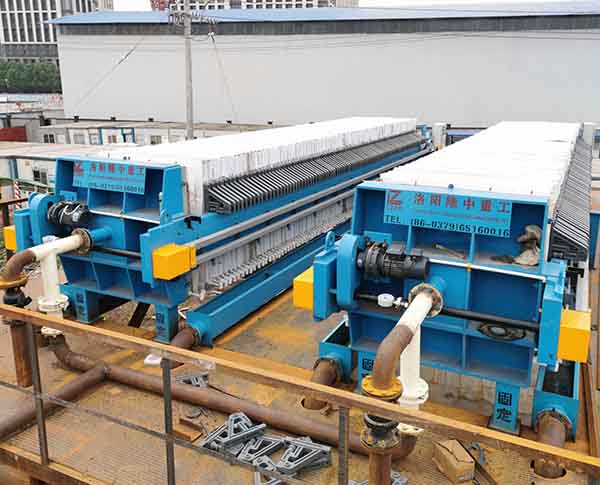
As a commonly used solid-liquid separation equipment, the filtering effect of the filter press is mainly related to the properties of the slurry, the properties of the filter cake, the pressure difference of the filter medium, and the degree of vacuum. In the production process, starting from these aspects, the filtration effect of the filter press can be effectively improved. 1. Improve slurry properties A. Increase slurry concentration The productivity of the filter press increases as the slurry concentration increases. Therefore, the slurry concentration can be appropriately increased, and the productivity of the filter press can be improved. Usually, most processing plants require slurry concentration greater than 40%. B. Reduce fine-grained material in slurry There are more fine-grained materials in the slurry, so the filterability of the slurry is poor. In production, coarse-grained materials can be "incorporated" into the fine-grained slurry, thereby changing the particle size composition of the filter press cake and improving water permeability. It is also possible to use a coagulant to agglomerate the fine ore particles into flocs, forming a loose filter cake on the surface of the filter cloth. C. Specific analysis of flotation reagent properties The flotation reagents contained in the slurry are complex. Most flotation reagents reduce the…
read more >> In actual beneficiation operations, in addition to selecting a suitable flotation process, the selection of reagents is also particularly important. By adding chemicals, the hydrophobicity of graphite can be improved to improve the effective separation of graphite and gangue minerals. At present, common graphite ore flotation agents are mainly collectors, foaming agents, and regulators. 1. Collector Graphite itself has a certain floatability, and graphite concentrate can also be floated without using a collector, but the flotation efficiency is not ideal. Therefore, by properly adding a collector, a thin oil film can be formed on the surface of graphite ore to enhance its hydrophobicity and make it firmly attached to the air bubbles, thereby improving the floatability of graphite and improving the recovery rate of concentrate. Common graphite ore flotation reagents mainly include kerosene, diesel oil, liquid paraffin, heavy oil, and other hydrocarbon oils. 2. Foaming agent Foaming agents are composed of polar and non-polar groups of molecules, wherein the polar groups are hydrophilic and the non-polar groups are hydrophobic. By adding a foaming agent, the mechanical strength of the bubbles can be increased, and at the same time, the number and size of the bubbles can be controlled, the speed of the floating…
read more >>
Graphite ore flotation beneficiation and purification can make the grade of graphite reach 80-90% or even about 95%. The graphite flotation process mainly includes three parts: ore preparation, slurry mixing, and grinding and flotation. The flotation method of graphite ore is mainly based on the difference in wettability of the surface of graphite and gangue minerals. Due to the good hydrophobicity of graphite, it will adhere to and float on the air bubbles, while the hydrophilic gangue will remain in the water to achieve flotation separation. 1. Graphite mine preparation process Crushing It mainly relies on crushing equipment to complete mechanical crushing by means of extrusion, impact, splitting, and grinding to achieve the initial dissociation of graphite and gangue minerals. Jaw crushers are often used for coarse crushing of large-sized minerals. Hammer crusher and impact crusher are used for secondary crushing of minerals, and cone crusher and roller crusher are used for fine crushing of minerals. The hardness of graphite ore is generally medium hard or medium hard and soft. The crushing process is relatively simple, often using a three-stage open-circuit, two-stage open-circuit, or one-stage open-circuit process. Grinding Grinding is to further realize the dissociation of graphite monomers or conjoined bodies. In order to…
read more >>
All-slime cyanidation gold extraction process is one of the important process methods for gold extraction. The gold ore full-slime cyanidation process can be divided into six stages: crushing and screening, grinding and gravity separation, secondary classification, dedusting and pulping, cyanidation leaching, and desorption electrolysis. 1. Crushing and screening work Gold raw ore enters the jaw crusher through the feeder for coarse crushing. The coarsely crushed products are transported by the conveyor into the vibrating screen for screening. The ore particles that meet the requirements enter the powder silo for storage. Unqualified ore particles are returned to the cone crusher for re-crushing. After that, the ore discharged from the cone crusher and the ore discharged from the jaw crusher enter the screening machine together for processing. Such a two-stage one-closed-circuit crushing and screening operation can reduce the over-crushing of ore, improve the working efficiency of the crusher, and also separate useful minerals and gangue minerals as much as possible. 2. Grinding and gravity operations The material stored in the silo enters the ball mill through the screw conveyor for grinding, and part of the products after grinding has achieved the monomer dissociation of concentrate and gangue minerals. In order to avoid the waste…
read more >> Lead and zinc metals are widely used in various industrial fields. However, in the actual mining process, the composition of lead-zinc oxide minerals is complex and the mineral structure is complex. Therefore, the selection and smelting technology of ore put forward higher requirements. The following will systematically introduce the beneficiation technology of low-grade lead-zinc oxide ore. Lead-zinc ore beneficiation process According to the different floatability of useful minerals in lead-zinc ore, different sulfidation flotation methods need to be adopted. The methods of treating lead-zinc oxide ore include sulfide flotation, direct flotation with anionic collectors, and leaching flotation. The most commonly used method is sulfidation flotation. According to the different degrees of floatability of lead and zinc, the method of first suppressing the floating of lead, then activating zinc, and then recovering lead and zinc concentrate, in turn, is the priority flotation method. After the lead and zinc concentrates are mixed and floated, the method of separating lead and zinc concentrates is the mixed flotation method. The beneficiation of lead-zinc ore is mainly based on the flotation process, and the choice of the agent has an important influence on the flotation effect. Flotation reagents are mainly used to adjust and control the process of flotation,…
read more >>


Copyright © 2015 - 2026 Luoyang Longzhong Heavy Machinery Co., Ltd. Website Map | Privacy policy | Contact Us




Inquiry