

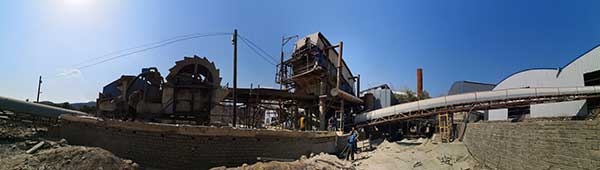
Sludge dewatering is a separation method of solid and liquid components for easily and more cost effectively handle the separate phases for final dry disposal. The liquid sludge has to be dewatered and removed water from the fluid state and converts it into a semi-solid or solid mud block. After dewatering, the moisture in sludge can be reduced to 50-80%, this mainly depends on the properties of sludge and sediment and the efficiency of dewatering equipments. Dewatered sludge is generally easier to store and transport than concentrated or liquid sludge. Why is sludge dewatering necessary? Sludge dewatering is the important part of sewage treatment system. After being concentrated and digested, the sludge still has a water content of about 95% to 97%, and the volume is still large. Additionally the sludge contains a large number of harmful toxic substances, such as parasite eggs, heavy metals, etc., useful substances such as phytonutrients, organic matter and water. For waste minimization and cost efficiency disposal, the sludge needs to be dewatered. The purpose of sludge dehydration is to remove the water between and within the sludge particles, so that sludge reduction, stability, harmless, and comprehensive utilization. The ideal dehydration should be to remove the maximum amount of water, while…
read more >>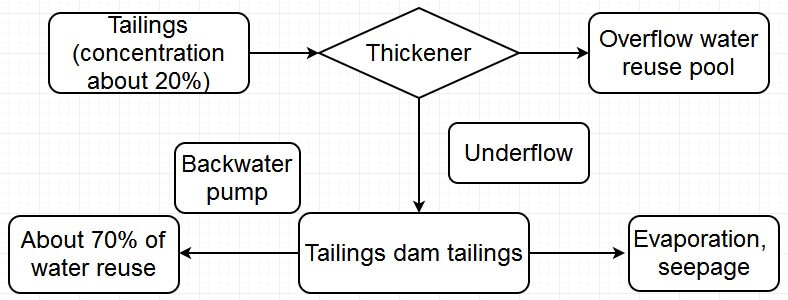
Tailings dry discharge is a new tailings disposal process that has gradually emerged in recent years. It refers to the tailings slurry outputted by the beneficiation process concentrated in multiple stages, and then treated by high-efficiency dewatering equipment such as dewatering screen to form slag with small water content, easy precipitation and solidification. The slag can be transported to a fixed location for dry storage. Traditional tailings discharge system in tailings dam As can be seen from the above flow chart, there are many problems with traditional tailings emissions: 1. The tailings slurry is all discharged into thickener, resulting in a very high load on the thickener. So the thickener with a large diameter is required, along with this, is the large occupied area and high investment cost. 2. The large area, serious damage to environment, and large safety hazards of tailings pond resulting in difficulties in site selection, long tailings transportation distance, huge capital investment and high operating costs. 3. The low recovery rate, about 70%-75%, long return water pipeline, large capital investment, and large power consumption, resulting in high return water utilization costs. Tailings dry discharge system The system is mainly composed of tailings dewatering system, thickener, clear…
read more >>
The application of vibrating screens is very common in sand and gravel processing systems, and the vibrating screen panels as its main component is the key to quality and productivity of finished products. This paper will focus on the four types of screen panels in sand screening process, such as polyurethane screen, steel screen, steel screen and square steel screen, which will produce the impact on aggregate quality, service life and economic cost, in order to play a certain role in the selection of screen panel. Effect of four screen panels on aggregate quality Due to the different materials of four screens, it will directly affect the opening form and opening ratio of the screen during use, thus affecting the quality of finished sand. 1. Polyurethane screen panel Due to the low strength and relatively high toughness of polyurethane, the width and thickness of scree panels are required to resist the damage caused by the falling of aggregate from the belt conveyor. In the case where the size of screen panel is constant, it is inevitable to reduce the opening ratio of the screen, which will reduce the screen permeability of vibration screen. So the polyurethane screen panel are mainly…
read more >>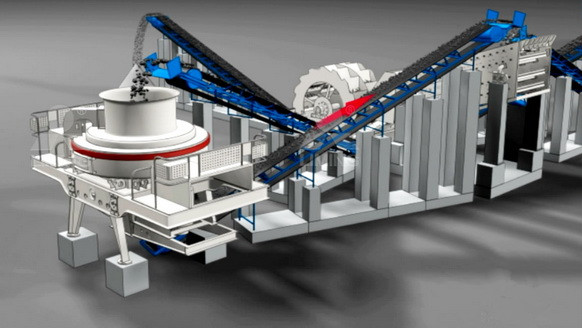
The mechanism sand production process mainly includes 7 systems: feeding--coarse crushing--fine crushing--grading--dust collecting-- sand washing and cleaning--transporting. This is the wet production process, including the main equipment such as hopper, vibrating feeder, jaw crusher, impact crusher, sand making machine, vibrating screen, dust collector, sand washing machine, belt conveyor and more. 1. Technical requirements for vibrating feeders Vibrating feeder is between the hopper and jaw crusher. It can feed the block and granular materials uniformly, regularly and continuously from the hopper to receiving device, and coarsely screen the materials. According to the performance requirements, the design should be: A. Try to reduce the pressure of material on the tank. Generally, the effective discharge of hopper should not be greater than 1/4 of the width of tank. The flow speed of the material is controlled at 6~18m/min. B. For materials with a large amount of feed, the barrage plate of the height should be set at the bottom discharge of the silo, but the barracks should not be fixed on the trough. C. In order to make the materials discharge smoothly, the back wall inclination of hopper can be designed to be 55~65°. 2. Selection of crushing equipment In the production process…
read more >>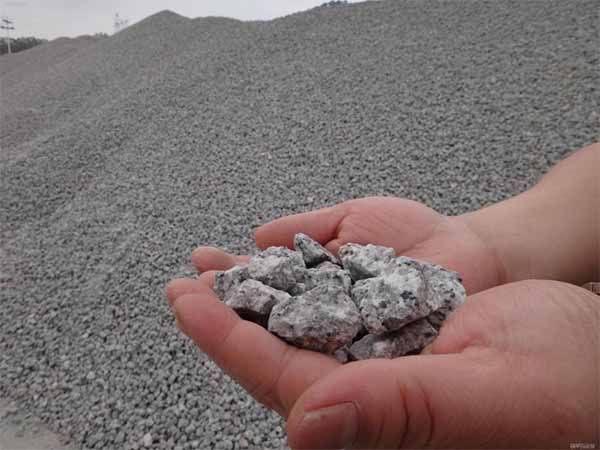
Sand aggregate, also named as aggregate sand, or sand and gravel aggregate, which is a wide category from coarse to medium to fine granula that include sand, gravel, crushed stone and aggregate. Sand aggregates are the granular loose material that acts as a skeleton or filling in concrete, and has a variety applications in cement concrete, asphalt concrete, road foundation, railway track slag, mortar and other construction industries. 1. What is the particle size of sand aggregate? Particles larger than 5mm are called coarse aggregates, often named as stones. Particle size of less than 5mm are called fine aggregates, also known as sand. 2. How is the thickness of sand divided by the fineness modulus? Sand is divided into four grades of coarse, medium, fine and extra fine according to the fineness modulus. The range is: coarse sand 3.7~3.1; medium sand 3.0~2.3; fine sand 2.2~1.6; ultra fine sand 1.5~0.7. 3. How to divide natural sand according to source? River sand, mountain sand, sea sand 4. What is mixed sand? A combination of natural sand and artificial sand in a certain proportion. 5. What is the mud content, clay lump content of sand, clay lump content of stone? Mud content:the content…
read more >>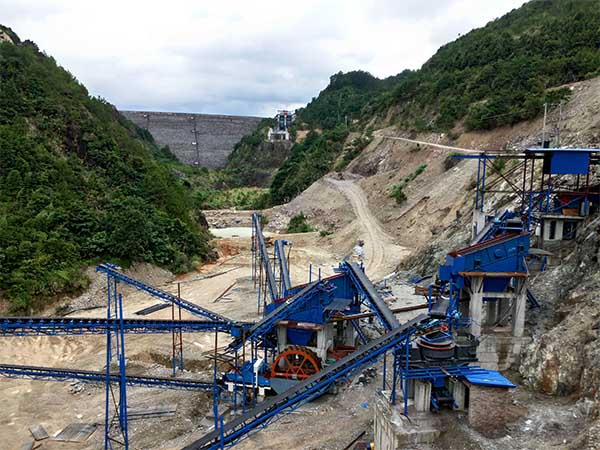
Gravel washing plant in Indonesia is widely used to produce raw materials for construstion, highway, railway construction, water conservancy engineering and metallurgical industry. And sand and gravel plant can have a variety of design and configuration schemes according to different materials and output, and there will be some design differences according to different terrain. So whether you require an individual piece of equipment or a gravel washing plant, based on yor requirements, we will develop the specific solution coupled with the details of how our equipment can help you address the issues you are facing now. LZZG have been engaged in the construction of gravel plant for decades, and have lots of experience of the construction of sand and gravel plant. We can build washing lines of various output of 20 to 200 tons per hour, which not only has reasonable design, low maintenance cost and durable equipment, but also has a good reputation among users in the mining industry. And LZZG gravel washing plant can maximize equipment service life, maximize resource yield and minimize waste. Five systems of gravel washing plant 1. Feeding system Feeding system is the beginning of a gravel washing…
read more >>
Gold wash plant used to mine gold mixed with sand alluvial placer, tailing after ball milling, and diamond and zirconium in raw ore. If the percentage is high in the raw ore, iron ore needs to be retrieved first with magnetic separator, then gold, diamongd, zirconium will be concentrated, or the effectiveness will be affected. Gold wash plant can also be used in a variety of applications such as classification of solid waste and recovery of valuable minerals from raw materials. Trommels come in many designs such as concentric screens, series or parallel arrangement and each component has a few configurations. However depending on the application required, trommels have several advantages and limitations over other screening processes such as vibrating screens, grizzly screens, roller screens, curved screens and ratory screen separators. Advantages 1. Provide outstanding production capability suitable for a huge-operation site. 2. Make it easy to collect gold dust from law materials. 3. Be suitable for a small site or pilot production for site survey. 4. Have environment hardened structure to work in the coldest or the hottest weather without any problem. 5. Make one operator to manage several equipments. 6. Be easily…
read more >>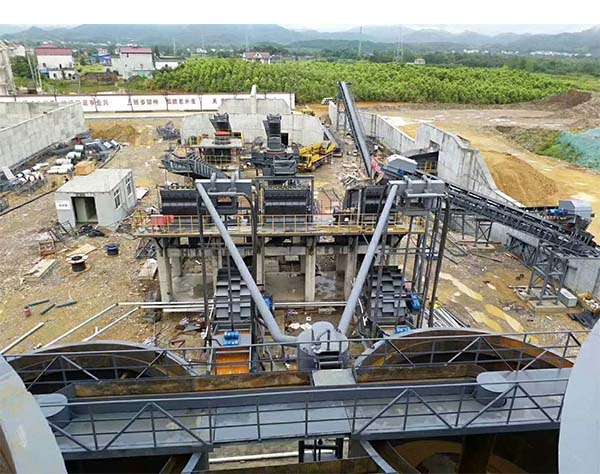
LZZG sand & gravel washing plant includes crushing, sieving, washing, recycling and muddy water purifying. The recently complete sand washing plant we design is build down the hillside as bellow. After the technicians of our company arrive at the scene, they find that the coordinate points of the user's surveying and mapping mountain body are not in line with the actual situation, and the field surveying and mapping, and comparison with the professional mapping paper, determine the position, provide the user with the overall layout drawing of the production line, the user is satisfactied with the design of the sand and gravel washing plant. 1. Customer’s requirements for the sand washing plant Raw material: crushed mechanical sand Capacity: 180 tons/h Water consumption: 250 m3/h To wash, dewatering, fines recycling and mudy water recycle 2. Equipments in the sand washing plant (1) Wash, dewater and fines recycling Sand washing and recycling machine--Model LZ36-120 (2) Muddy water purifying Thickener--S-6000 Press filter--G2502-125/2sets 3. sand washing plant design First step: Achieve sand and gravels washing, fines recycling and dewateringby using sand washing and recycling machine. Second step: Realize muddy water that discharged from above sand washing and recycling machine purification and separation by using thickener. Finally step: Press the sludge…
read more >>
Dewatering screen is a kind of mineral equipment. It is mainly for dewatering, desliming and desulphurization. There are several classifications in dewatering screen equipment, including slime dewatering screen, sand dewatering screen, high-frequency dewatering screen, and tailings dewatering screen. What are the features of these types dewatering screens? 1.Slime dewatering screen: It is specially used for washing equipment for desliming, stripping and dewatering in coal washing plants. It can be used for recovering slime with a particle size of <9mm. It is a special equipment for dewatering operations of coal slime, which is widely used for slime recovery. Pressure filtration and thickening, filtration, and other fine material dehydration, recycling operations. 2.Sand and stone dewatering screen: It is commonly used in the wet sand production line and sand washing machine for supporting use, can also be used alone. Sand and gravel are washed by sand washer, then for hydraulic classification, desliming and sand recovery by dewatering screen. To achieve a reasonable particle size ratio, and reduce the mud content below 0.7%. 3.Tailings dewatering screen: It is widely used in tailings dry discharge, concentrate dewatering and other operations. This equipment is particularly suitable for the treatment of fine-grained minerals, for the automatic separation of slag water, tailings dry discharge technology, etc.,…
read more >>
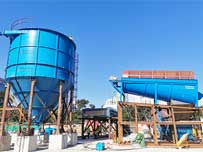
With many years development of sand washing industry, we found that lots of waste water is discharged everywhere without process and recycle, which seriously damage the river, mountain, city and village water system. Aiming at this phenomenon, our company researched and developed a leading international rapid muddy water purification system for five years --- LZ thickener. The secret of muddy water purification system is flocculant. The thickener is a cylindrical shape, and equipped two mixing tanks. Add the flocculant to mixing tanks for even stirring, then flocculants flow into muddy water continuously. Then the suspended solids settle down into bottom conical sludge tank by gravity, clean water flow away from overflow port around the upper tank. It can be combined with production machinery and equipment to form systematic production line, and widely used in sand and aggregate plant, metal concentrate plant, ceramic industry, glass industry and other industry.
read more >>
With a new technological revolution, the comprehensive technical of sand washing machine products has leapt to a new level. The new sand washing machine is better in terms of work efficiency, operation quality, environmental protection, operation performance and automation. Where will the sand washing machine industry in the future go? Which product will be accepted by users? 1.Energy saving and friendly environment The increasingly severe environmental problems have become an indisputable fact. In the future, the development of sand washing machine industry will pay more attention to transformation and upgrading. Energy conservation and environmental protection will become the main direction of development in the specific implementation strategy. So it is inevitable that sand washing machine industry will take the road to environmental protection. Since realizing the grim situation, sand washing industry has rapidly implemented an innovation-driven strategy, promoted industrial transformation and upgrading, strongly promoted energy conservation and emission reduction, and accelerated the construction of ecological civilization. This is the basic requirement for the development of sand washing industry in the future, and it is also the final requirement. 2.Personalized, modular design Modular design technology is to divide and design a series of functional modules based on the…
read more >>
As we all know, with the continuous development of science and technology, construction waste has been seen as a misplaced resource. The how to recycle construction waste has been a pressing issue now. Because construction waste has a wide erosion effect on our living environment. If we don’t handle construction waste for a long-term, it will have adverse effects on urban sanitation, living conditions, and land quality assessment. Firstly, a large amount of land piles up construction waste, which will reduce the quality. Secondly, construction waste will affect air quality. Some dust particles will be suspended in air and harmful to human health. Thirdly, long-term accumulation of construction waste will cause harmful substances infiltrate groundwater area and pollute water environment; Finally, construction waste piled up in the city, it will be unfavorable to the urban environment and appearance. And the stacking of construction waste may have some hidden safety hazards. Then how to recycle construction waste? In order to achieve construction waste to be recycled, LZZG developed a developed a construction waste disposal machine. It combined crushing, screening, washing and recycling. Vibration feeding system >> Concrete crushing system >> Screening system >> Secondary crushing system >> High-pressure washing system >> Fines recycling system >> Dust purification systems >> Automatic control system Construction…
read more >>


Copyright © 2015 - 2026 Luoyang Longzhong Heavy Machinery Co., Ltd. Website Map | Privacy policy | Contact Us




Inquiry