


Hot Types of Sand Washing Machines From LZZG
Published: 10/22/2026
Why Sand Needs Washing ?
Sand straight from the pit or crusher carries silt, clay films and stone powder. Left unwashed, it fails the mud-content limits concrete and masonry buyers set, sells at a discount, and often gets rejected outright. A sand washing machine removes those contaminants and dewaters the product, which is why it sits at the center of most aggregate and sand production plants.
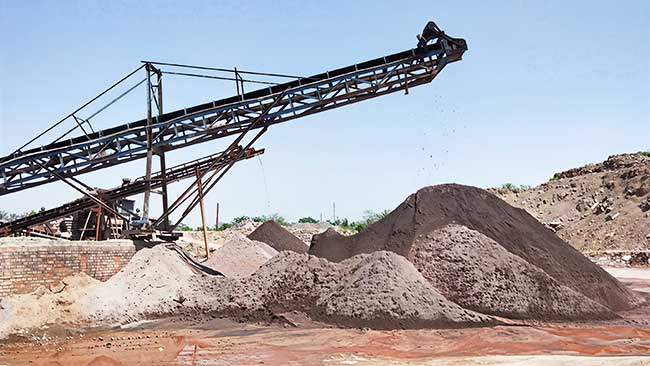
No single machine covers every feed. The choice depends on how much clay you start with, the particle sizes you need to keep, and how much water you can run. 8 types cover the range most sand producers choose from.
The 8 Types of Sand Washing Machines
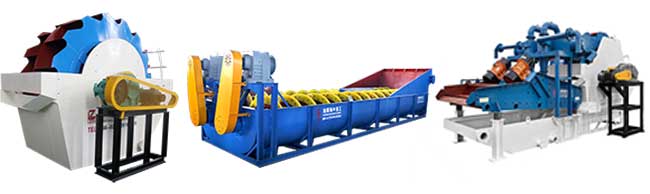
1. Wheel Sand Washer: lifts sand out of a washing tank with a rotating bucket wheel, letting water and light impurities drain through the overflow.
2. Spiral Sand Washer: uses one or two screw shafts in a long inclined trough to lift sand while water and fines flow back down.
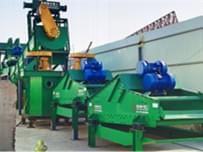
3. Sand Washing & Recycling Machine: combines a wheel washer, a dewatering screen and hydrocyclones in one unit, so it washes, screens, dewaters and recovers fines in a single pass.
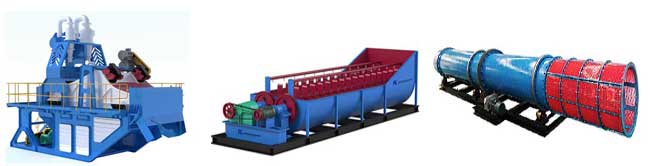
4. Hydrocyclone System Washer: separates by centrifugal force and produces two sizes of sand in one pass: a coarse fraction from the dewatering screen and a recovered fine fraction from the cyclone.
5. Log Washer: is a heavy-duty trough scrubber with two opposite-rotating, rubber-lined paddle shafts that break plastic clay off the grains.
6. Trommel Scrubber: is a long rotating drum with rubber liners that lifts and drops coarse feed under water to scrub gravel and clay lumps.
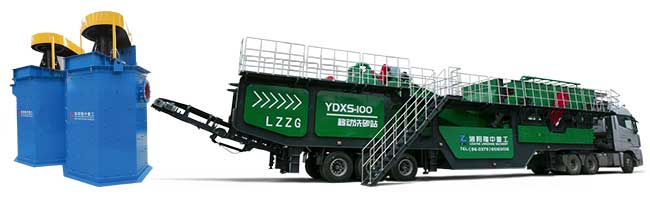
7. Attrition Scrubber: churns slurry at 65% to 70% solids so particles collide and strip surface coatings from each other.
8. Portable Wash Plant: packs screening, washing, dewatering and fines recovery onto a trailer chassis.
8 Types of Sand Washer Comparison Table
| Type | Application | Advantages | Limits | Typical Capacity |
| Wheel sand washer | Low-clay feed, upgrading sand in a compact footprint | Simple to run; low energy; small footprint; easy maintenance | Light cleaning; loses some fines to overflow | 20-250t/h |
| Spiral sand washer | Moderate clay; grading + dewatering in one step | Continuous operation; good dewatering; handles coarse fractions | Weak on sticky clay; single-screw loses more fines | 20-500t/h |
| Washing & recycling machine | Crushed, river, lake or sea sand where you must wash and keep the fines together | Washing + screening + dewatering + fines recovery in one unit; up to 95% fine recovery; low product moisture (12–15%); compact | Feed up to 10 mm; needs slurry pump and cyclones | 20–250 t/h |
| Hydrocyclone system washer | Manufactured / natural sand where fines and moisture spec matter | Produces two sand sizes per pass; high fines recovery; low moisture; no loss to the pond | Needs consistent feed and a slurry pump; more engineering | 40-300t/h |
| Log washer | Feed with >20% mud, clay-bound gravel, ore desliming | Breaks down plastic clay others cannot; handles coarse feed; discharge-end dewatering | Higher power and wear; not for fine sand alone | 10–100 t/h |
| Rotary trommel scrubber | Gravel, aggregate, sandstone, lump ores | Handles feed up to 300 mm; high scrub intensity; low sludge in output; adjustable speed | Heavy; high power; overkill for clean sand | up to 500 t/h |
| Attrition scrubber | Glass sand, frac sand, mineral sand, iron ore | Strongest surface cleaning; removes coatings; low floor space; light starting | Feed up to 10 mm only; mostly a finishing step | 10–80 t/h |
| Portable wash plant | Contractors, temporary or moving sites | No foundations; relocatable; low installation labor; on-site processing cuts hauling | Smaller capacity; fewer modules than fixed lines | 20–120 t/h |
Which Type Do You Need?
Start with a single machine only when the feed is simple. Real production rarely works that way. Clay-heavy, coarse or dirty feed usually defeats a single washer, so most plants run two or more washing stages in series: scrub first to break contamination loose, then classify and recover the fines.
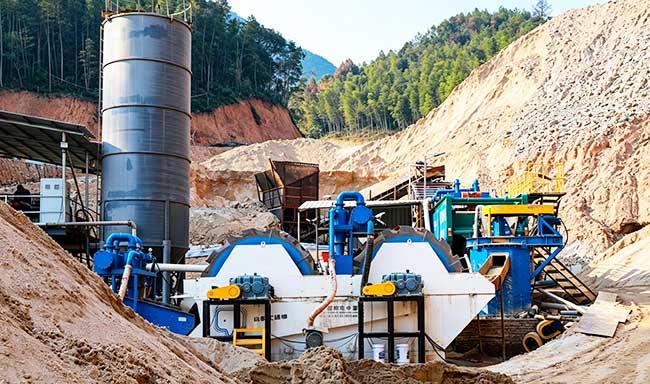
①. For clean feed with light clay, a wheel sand washer is enough. Step up to a spiral sand washer when you need longer scrubbing and better dewatering on moderately clayed feed. For more details about the two types of sand washers, please check our article: Wheel vs Spiral Sand Washer: Which One Should You Choose
②. If you must wash and keep the fines in one compact unit, take the sand washing & recycling machine. If you want two product sizes with tight moisture control, run a hydrocyclone system washer instead.
③. If the feed carries heavy clay over 20% mud, switch to a log washer to break plastic clay loose, and add a rotary trommel scrubber when the feed is coarse or lump-bound and needs high-intensity scrubbing. On this kind of feed, combine both scrubbers for the hardest material.
④. When you sell on purity, such as glass sand or frac sand, use an attrition scrubber to strip surface coatings, and pair it with fines recovery to keep the product on spec.
⑤. If the site moves between pits or you run a short-term contract, skip the fixed line and take a portable wash plant.
And before you fix the sand washer, settle the water loop. Every sand washing machine above moves water, and scrubbers use the most. Choose the sand washer and the water recycling together, because one decides the other. When a complex feed needs multiple washing stages, the water loop grows with it, so size it for the whole line, not one machine.
Quick Choose Guide by Feed Condition
| Feed Condition | Key Check | Recommended Type |
| Low clay, upgrading sand | Clay roughly under 5% | Wheel sand washer |
| Moderate clay, grading + dewatering | Clay 5–20%, even feed | Spiral sand washer |
| Must wash + keep fines in one unit | Compact, single machine preferred | Washing & recycling machine |
| Two-product output, tight moisture spec | Coarse + fine fractions both saleable | Hydrocyclone system washer |
| Heavy clay, over 20% mud | Plastic, sticky clay | Log washer |
| Coarse gravel, lump ore | Feed over ~70 mm | Rotary trommel scrubber |
| Surface purity (glass / frac sand) | Purity in tenths of a percent decides price | Attrition scrubber |
| Mobile or temporary site | Operation moves between pits | Portable wash plant |
Previous:bauma CHINA 2026 | Welcome To Meet LZZG | Get Free Tickets
Next:none





Send Message
Please write down your requirement and contact details in the following form. You can also send a message to us by this email export@lylzzg.com, we will reply to you within 24 hours.