


Aggregate Washing Equipment: How Screw Washers Clean Sand and Gravel
Published: 11/05/2026
Aggregate washing equipment removes silt, clay film and stone powder from pit-run or crushed sand so the material meets the mud-content limits that concrete, asphalt and masonry buyers set. In most aggregate plants the machine that does this job is a screw washer, also called a spiral washer or sand screw: one unit that scrubs, classifies and partly dewaters 0–10 mm feed in a single pass.
This article covers how the machine works, the models LZZG builds between 20 and 500 t/h, what separates a single screw from a twin screw, and where a screw washer stops being the right choice.
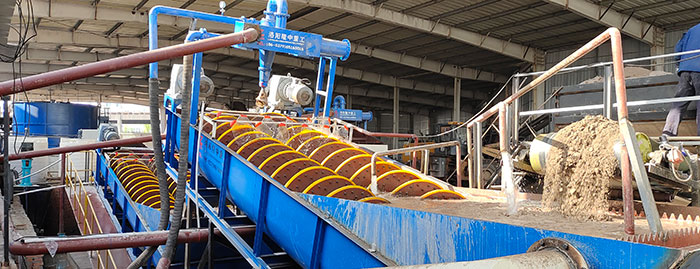
Screw Washer In A Wash Circuit
Feed enters the trough at the upper end. Washed sand leaves at the discharge end. Muddy water overflows the weir at the lower end and goes to the settling pond or thickener. Two streams out, two streams in, nothing more complicated than that.
- Feed: 0–10 mm sand and fine gravel, typically carrying 5–20% silt and clay
- Sand output: a controlled mud content, ready for stockpile or a dewatering screen
- Water output: silt-laden overflow, which is where the process loses its fines
- Outside its scope: breaking plastic clay (that is a log washer or attrition scrubber job) and recovering the fines that leave with the overflow (that needs a separate fine sand recovery unit)
Working Principle
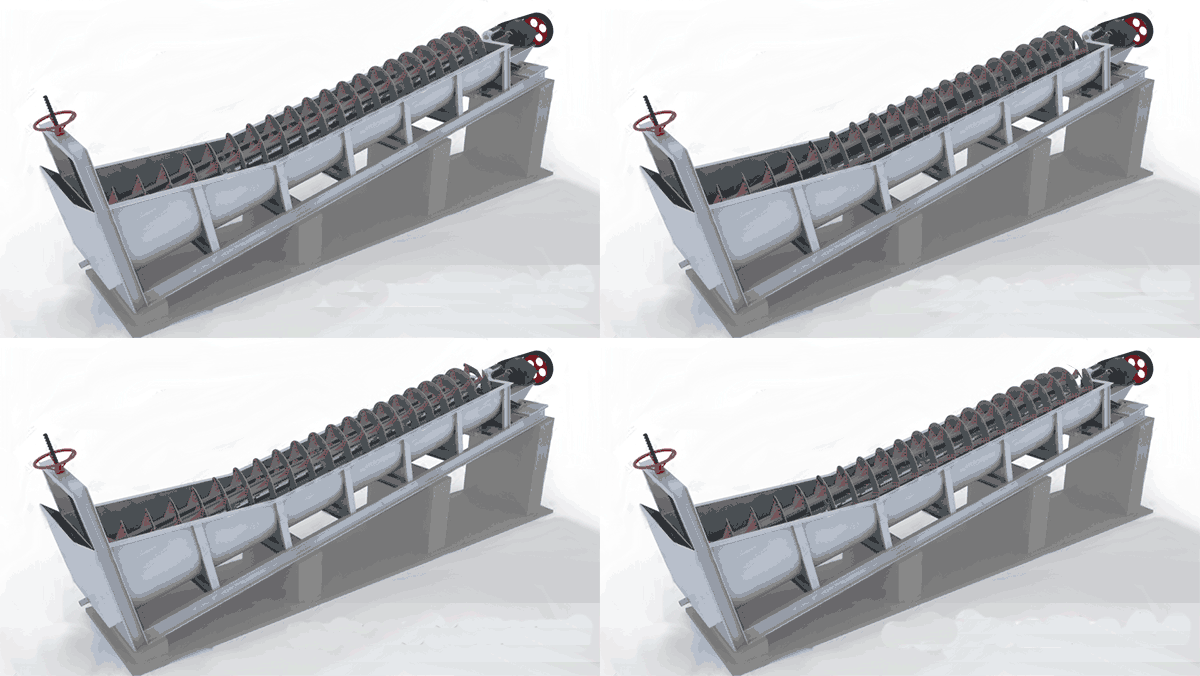
The trough sits at a 15° incline. At the lower end, three weir plates hold back water and form the settling pool. The screw head is immersed in that pool. A motor drives the screw through a reducer, so the flights turn continuously and slowly.
Fresh water enters through the perforated plate at the bottom of the pool and rises through the sand bed. Sand settles because it is heavy; silt and clay stay suspended because they are not. The flights then lift the settled sand up the incline, and the water drains back down through the bed as it climbs. By the time the sand reaches the discharge, it has been scrubbed, rinsed and partly dewatered — which is why one machine can replace a washer and a classifier in a small plant.
Classification happens inside the same pool. Coarser grains settle faster and are lifted out earlier, so a correctly set weir gives you a reasonably even product without a separate classifier.
What Decides Whether the Washer Performs
| Setting | Effect when increased | What it costs you |
| Weir plate height (pool volume) | Longer retention time, cleaner sand, better classification | More fines lost to the overflow |
| Wash water flow | Stronger rinsing, less silt left on the grain | More water to treat and recycle |
| Feed rate | Higher output | Thin slurry, sand carried over the weir, dirty product |
| Screw speed | Faster transport up the incline | Shorter scrubbing time, higher wear |
In practice the weir plates are the adjustment that matters most. Raise them and the product gets cleaner while more fine sand leaves with the water; lower them and you keep more fines but the sand carries more silt. The right setting is the one that hits your buyer’s mud-content spec without giving away saleable fines. If both cannot be met at once, the plant needs a fines recovery unit downstream rather than a different washer.
Sand Screw Washer Type
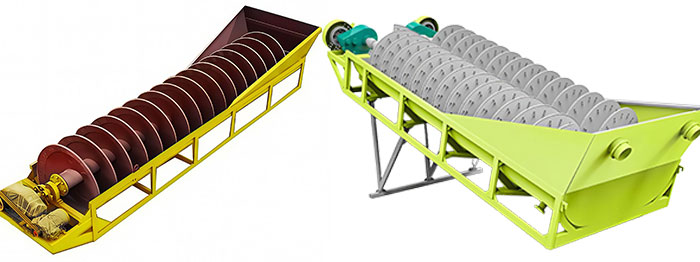
LZZG builds the LX series in single-screw type and twin-screw type. Feed size is 0–10 mm across the range. Both are the same machine repeated. The twin screw is two parallel troughs on one frame, usually sharing a water feed and a discharge chute.
- Single screw: 20–250 t/h, narrower footprint, easier to fit into an existing line
- Twin screw: 60–500 t/h, half the length and footprint of two separate machines at the same output, and more stable grading because the two screws share the load
The switch is usually driven by capacity, not by washing quality. Below roughly 150 t/h a single screw is normally the cheaper answer. Above that, two single screws cost more in steel, foundations and maintenance points than one twin.
A screw washer is the workhorse for routine sand and gravel cleaning. When the feed turns plastic, the screw cannot break the clay apart and a log washer or scrubber has to come first. When fines retention matters more than throughput, a washing and recycling machine is the better buy.
What the Sand Screw Washer Delivers
Mud-content targets vary by market, so set the number before choosing the machine. ASTM C33 caps material passing the 75 µm sieve at 3% for natural sand, rising to 5% for manufactured sand where the fines are clean stone dust free of clay; masonry and plaster sand buyers often accept more. A single screw washer handles the general construction range comfortably. A tight 1% limit on a clay-heavy feed usually means two washing stages, not a bigger washer.
Discharge moisture from a screw washer is higher than from a dewatering screen, because the machine drains the sand on the incline rather than pressing it. Plants that load straight into trucks or need a dry stockpile add a dewatering screen or a washing and recycling unit after the screw. Plants that stockpile and let the pile drain can often skip it.
FAQ
Is a Screw Washer the Same As a Sand Washing Machine?
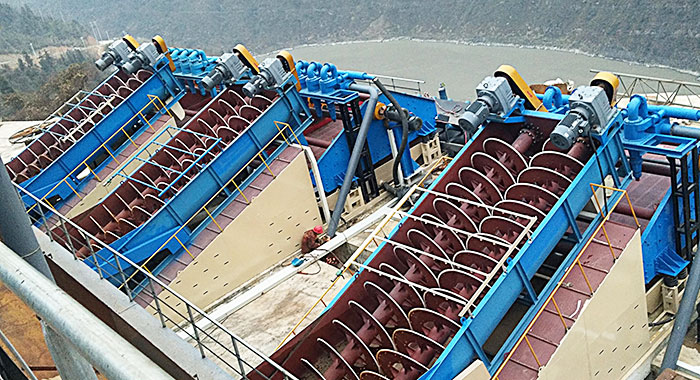
A screw washer is one type of sand washing machine. The category also covers wheel washers, log washers, trommel scrubbers and combined washing and recycling units. Screw washers are the most common choice for routine aggregate cleaning because they wash, classify and partially dewater in one pass.
What Feed Size Can It Take?
0–10 mm. Coarser gravel goes to a log washer or a trommel scrubber, which are built for lump feed.
Can It Handle High-Clay Feed?
Up to roughly 20% silt and clay, and only when the clay is friable. Plastic, sticky clay resists water alone and needs mechanical scrubbing before the screw washer can finish the job.
How Much Water does a Screw Washer Use?
It depends on how dirty the feed is and how clean the product has to be. The washer needs a continuous flow through the perforated plate plus enough overflow to carry the silt away. That overflow is the number to design the settling pond or thickener machine, so it is sized together with the washer, never after it.
Can It Replace the Classifier In an Existing Plant?
Often yes. A screw washer classifies coarse from fine inside the same pool, so on simple sand circuits it covers both duties. Where two clean product sizes are required, a hydrocyclone system does the splitting more sharply, you may need the HS sand washing system.
Previous:8 Hot Types of Sand Washing Machines From LZZG
Next:none





Send Message
Please write down your requirement and contact details in the following form. You can also send a message to us by this email export@lylzzg.com, we will reply to you within 24 hours.