


30 TPH Clay Sand Washing Plant in Algeria
A sand producer in Algeria was mining natural river sand that looked clean in the stockpile but failed concrete-grade specs. Lab sieve analysis showed the feed was roughly 50% clay and silt by weight, with only half the material being usable sand. The 0‒0.063 mm fraction alone made up 15‒25% of the feed, and slime coatings on the sand grains prevented proper cement bonding.
Sold as-was, the sand was rejected by concrete plants at low prices. The stockpiled silt-clay mix was also becoming an environmental disposal liability. The customer needed a complete river sand washing plant — not a single machine — that could process 30 tonnes per hour, split the output into commercial fractions, and recover the fine sand that would otherwise be lost to slurry.
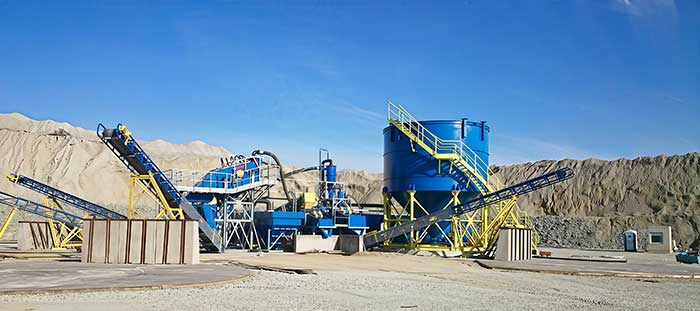
How to Remove Clay from River Sand
Removing 50% clay from sand cannot be done with a single screw washer. Clay coats the grains; it must be dispersed first, then hydraulically separated, then the usable fines recovered before they go to the pond.
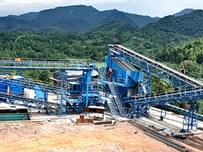
LZZG Proposed A Six Stage Wet Process
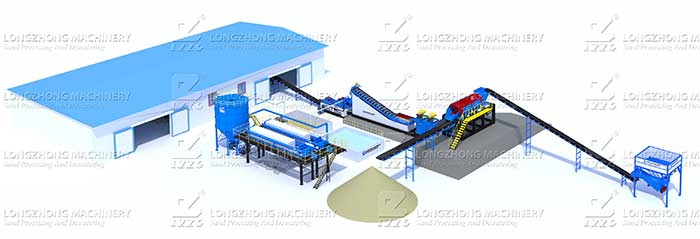
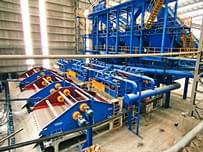
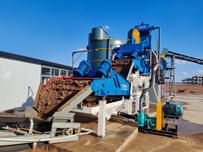
Feed Hopper → Vibrating Feeder → Trommel Screen → Attrition Scrubber → Hydrocyclone Cluster → Dewatering Screen → Fine Sand Recovery → 4-Deck Sizing Screen → 5 Product Conveyors
1. Trommel Pre-Screen
Oversize material (>5 mm) and trash are rejected before the slurry reaches the scrubber and pumps, protecting the downstream equipment from stones, roots and debris.
2. Attrition Scrubbing
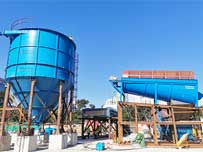
The scrubber agitates the slurry at 60–65% solids by volume, rubbing sand grains against each other to strip clay coatings. This is the critical step: without proper scrubbing, hydrocyclones cannot separate dispersed slime.
3. Hydrocyclone Classification
The cluster of hydrocyclones cuts the slurry at the 0.063 mm boundary. Slime and clay overflow to a thickener; the underflow, the sand fraction, drops to the dewatering screen.
4. Dewatering
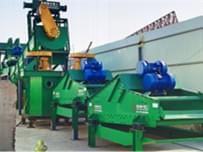
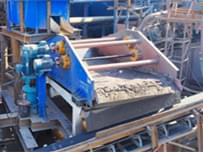
The high-frequency dewatering screen with polyurethane panels dewaters the underflow from around 30% moisture down to roughly 13%, ready for stockpiling.
5. Fine Sand Recovery
The hydrocyclone overflow still carries 0.075–0.15 mm usable sand. A dedicated fines recovery unit captures this material instead of sending it to the pond. Typical sand recovery improvement: +8–12% versus a simple sand screw.
6. Final Sizing
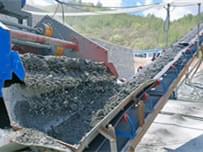
A 4-deck vibrating screen splits the cleaned, dewatered sand into five commercial fractions, each discharged on its own belt conveyor.
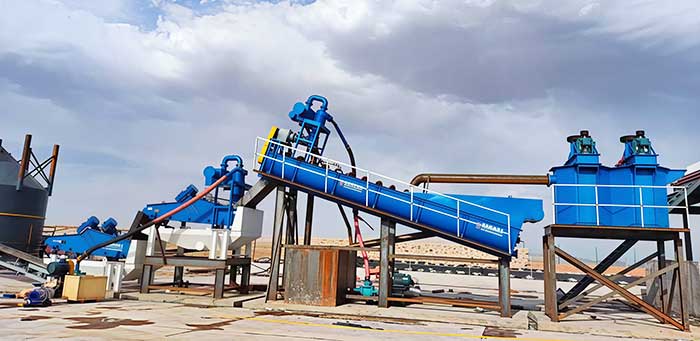
The plant is a closed-loop water system: thickener overflow (clarified water) is pumped back to the wash circuit, and fresh make-up water only tops up what leaves with the dewatered sand and the thickened clay underflow. This brings fresh water consumption down to roughly 12 m³/h against 55 m³/h total recirculation, about 22% fresh and 78% recycled.
Thickened clay underflow is discharged in filter-press-ready slurry trucks or dried on a settling pad, avoiding open lagoon discharge.
Clay Sand Washing Plant Effection
| Fraction | Size range | Approx. output |
| Coarse sand | 1.0–2.0 mm | 2.0 t/h |
| Medium sand | 0.5–1.0 mm | 4.0 t/h |
| Fine sand | 0.25–0.5 mm | 5.0 t/h |
| Very fine sand | 0.125–0.25 mm | 4.0 t/h |
| Special/fines | 0.075–0.125 mm | 2.0 t/h |
FAQ
Q: How Much Does A 30 TPH Sand Washing Plant Cost?
A complete 30 tph clay sand washing plant (scrubber + hydrocyclones + dewatering screen + fines recovery + conveyors + PLC) typically ranges from USD 80,000 to 150,000 FOB China, depending on automation level, water recycling and number of products.
Q: How Do You Remove Clay From River Sand?
The proven process is attrition scrubbing to disperse clay coatings, followed by hydrocyclone classification to cut silt at 0.063 mm and a dewatering screen. A single sand screw is not sufficient when clay exceeds 20% of feed.
Q: What and Recovery Rate Can I Expect On Clayey Feed?
With proper scrubbing, hydrocyclones and fines recovery, expect 85–92% sand recovery on feed that is 40–60% clay. Without fines recovery, recovery typically drops to 70–75%.
Q: How Much Water Does A Sand Washing Plant Use?
Typical consumption is 1.5–2.5 m³ of wash water per tonne of feed. With a closed-loop thickener, fresh make-up drops to 0.4–0.6 m³ per tonne, about 20–25% of total flow.
Previous:Hungary Quarry Aggregate Washing & Sand Plant 150 T/H
Next:none





Send Message
Please write down your requirement and contact details in the following form. You can also send a message to us by this email export@lylzzg.com, we will reply to you within 24 hours.