


How To Remove Fine Sand From Aggregate
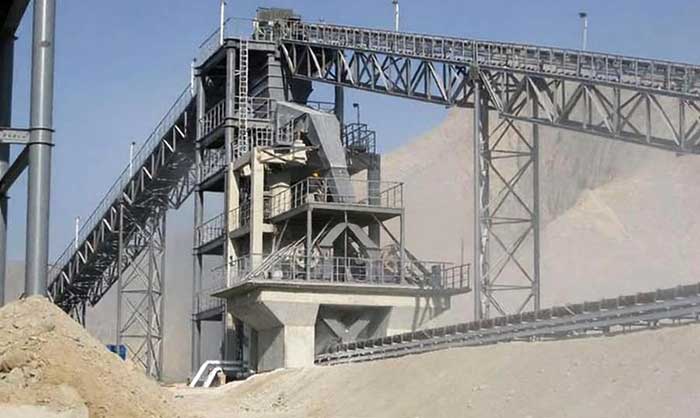
Removing fine sand from aggregate is straightforward once the feed is wet enough. Dry screening almost never separates the 75–150 μm (0.075–0.15 mm) fraction — the grains are too small and too light. The three-step process that actually works is: wet-screen to cut the oversize, wash in a wheel or screw washer to liberate fines, then classify the overflow with a hydrocyclone or air classifier when a precise cut is required.
- Wet-screen the feed and rinse the oversize on the deck.
- Wash in a wheel or screw washer to strip and suspend fines.
- Classify the slurry in a hydrocyclone (or air classifier) for an exact cut and recover usable fines.
1. Why Excess Fine Sand Is a Problem
Fine sand is defined as the fraction that passes a 0.425 mm (#40) sieve and is retained on 0.075 mm (#200); material below 0.075 mm is classified as silt or dust. Concrete and asphalt standards cap the amount of both, for good reason.
| Excess Fraction | What It Does To the Mix |
| Fine sand 75–425 μm | Raises the surface area and water demand; the paste that should bind coarse aggregate is spread over too many particles, lowering strength and workability. |
| Silt / dust below 75 μm | Coats coarse grains, weakens the cement bond, and increases shrinkage and cracking; it can also interfere with bitumen adhesion in asphalt. |
| Excess minus 0.075 mm | Blows out the mud-content limits in ASTM C33 and equivalent specifications. |
Specification sand for concrete is typically graded with fineness modulus around 2.6–3.0, mud content below 3–5%, and no more than a specified amount passing 0.075 mm.
2. Why Fine Sand Will Not Come Out with Dry Screening
Dry screening works down to about 5–10 mm; below that, three effects defeat it:
- Small, light grains: near the cut point the particles do not have enough energy to punch through an opening; they simply ride on the screen bed.
- Moisture and cohesion: even 2–4% surface moisture makes fine grains stick to each other and to coarse particles, so they behave as larger agglomerates.
- Blinding and pegging: fines pack into the apertures and seal them, and the layer of material on the deck keeps lower grains from ever reaching the screen surface.
The cure is to add water. Water breaks the surface tension, liberates the fines and turns the unwanted fraction into a slurry that can be carried away. This is why virtually every aggregate washing line is wet rather than dry.
3. Five Proven Removal Methods
3.1 Wet Screening with Water Sprays
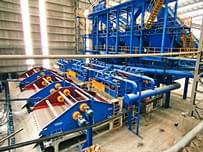
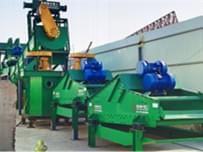
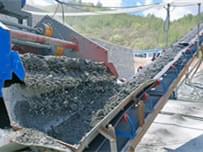
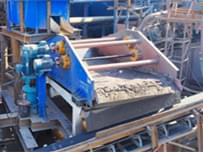
Water spray bars are mounted over the screening deck so the oversize is rinsed as it travels. Fines are washed through the apertures and leave with the screen undersize. Deck selection matters: a coarse cut is handled on polyurethane or rubber panels, while the fine cut is handled on a high-frequency or dewatering screen.
| Screen deck | Typical cut and role |
| Scalping / rinsing deck | 5–50 mm; removes trash and gives the first rinse. |
| Wet sizing deck | 1–10 mm; sprays liberate fines from the product fractions. |
| Fine / dewatering screen | 0.2–5 mm; recovers clean sand and reduces its moisture. |
Spray bars should cover the full bed width, with nozzle pressure and flow matched to throughput; the water must visibly fluidize the bed rather than merely wet it.
3.2 Wheel and Screw Sand Washers
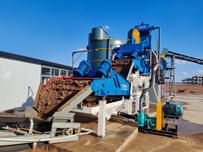
Washing machines physically scrub the feed and let fines overflow with the water. In a wheel (bucket) washer the settled sand is lifted and drained, while the dirty water and fines overflow a weir. In a screw (spiral) washer the spiral churns and agitates the material, dewatering it at the inclined discharge while fines escape in the overflow.
| Item | Wheel (bucket) washer | Screw (spiral) washer |
| Cut point | roughly 0.15–0.2 mm | roughly 0.15–0.3 mm |
| Fine loss | low; less sand carried over | higher; more fines and water overflow |
| Scrubbing | gentle, clean sand | strong, handles sticky/clay feed |
| Best for | clean, lightly-contaminated sand | muddy, clay-bound or aggregate feed |
Choose a wheel when the sand is already fairly clean and fines loss must be minimized, and a screw when heavy clay or mud has to be broken up. A comparison of sand washer types helps here.
3.3 Hydrocyclones and Fines Recovery
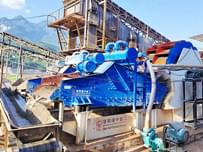
Washer overflow still contains a great deal of usable fine sand, which is why it is fed to a hydrocyclone. Centrifugal force sends coarser grains to the wall and out the underflow, while the finest material and water leave through the vortex finder. Cyclones deliver a much sharper and finer cut than gravity settling and recover sand that would otherwise be lost to the pond.
| Typical cyclone cut | Application |
| 75–150 μm | standard sand recovery from wash water. |
| 45–75 μm | steeper separation, low fines in the product. |
| 20–45 μm | fine classification; multiple smaller cyclones in a cluster. |
Cyclone underflow is delivered to a dewatering screen, which produces a conveyable, low-moisture product while the water recirculates. This is the core of a HS sand washing system.
3.4 Upflow and Hydraulic Classifiers
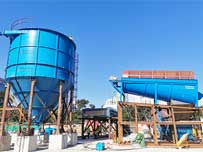
An upward current of water in a classification tank lifts the lighter, finer particles while heavier, coarser sand settles against the flow. Adjusting the rising water velocity sets the cut point precisely, so these units are used where several sand fractions must be separated cleanly, such as in glass sand and sports-sand production.
3.5 Air Classification
When water is scarce, the material is frozen or the product must stay dry, an air classifier uses an induced air stream to lift the fines from the coarser sand. Air classification suits dry manufactured sand and industrial minerals; it avoids tailings ponds but requires the feed to be dry and de-agglomerated, so it usually follows a crusher or dryer rather than a wet screen.
3.6 The Typical Combination Flowsheet
Most aggregate plants chain the methods rather than relying on one. The feed is rinsed on the wet screen, the sand fraction is scrubbed in a wheel or screw washer, the overflow is recovered through a hydrocyclone and dewatering screen, and the dirty water is thickened for recycling. The result is a clean, specification sand, a recovered fines stream and a small, manageable tailings stream rather than a large settling pond.
4. How to Choose the Right Method
| Typical cyclone cut | Application |
| 75–150 μm | standard sand recovery from wash water. |
| 45–75 μm | steeper separation, low fines in the product. |
| 20–45 μm | fine classification; multiple smaller cyclones in a cluster. |
A simple rule: if the feed is wet and sticky, wash and cyclone; if it is dry and clean, screen and air-classify. When the goal is manufactured sand rather than natural sand.
5. Practical Operating Tips
| Check | What to verify |
| Test the cut point | sieve the product and the overflow; if the product is still overloaded with minus 0.075 mm, raise the water or tighten the cyclone cut. |
| Keep the water balance | enough flow to transport fines, without flooding the screen; recycled water should settle before reuse. |
| Watch fine loss | recover cyclone underflow so saleable 0.075–0.2 mm sand is not sent to the pond. |
| Check media wear | worn or blinded apertures shift the whole gradation; inspect polyurethane panels and cyclone liners on schedule. |
For recycled feed, the same principles apply when separating sand from demolition and construction waste.





Send Message
Please write down your requirement and contact details in the following form. You can also send a message to us by this email export@lylzzg.com, we will reply to you within 24 hours.