

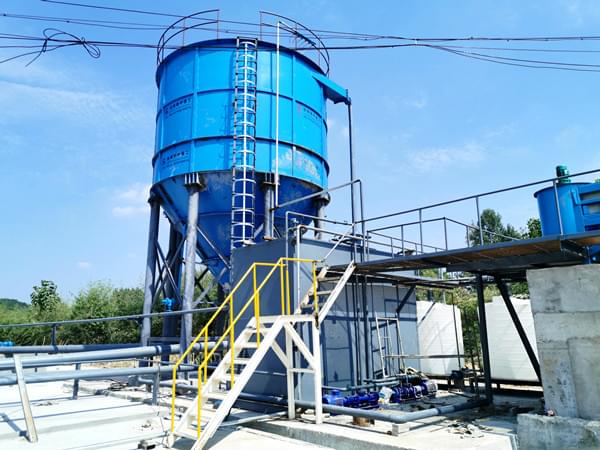
The thickener performance is affected by the feed concentration, flocculant, sediment layer, and operating factors. The five factors affecting thickener performance 1. Feed concentration The feed concentration for a thickener should ideally be between 20% and 30%. However, in practice, …
read more >>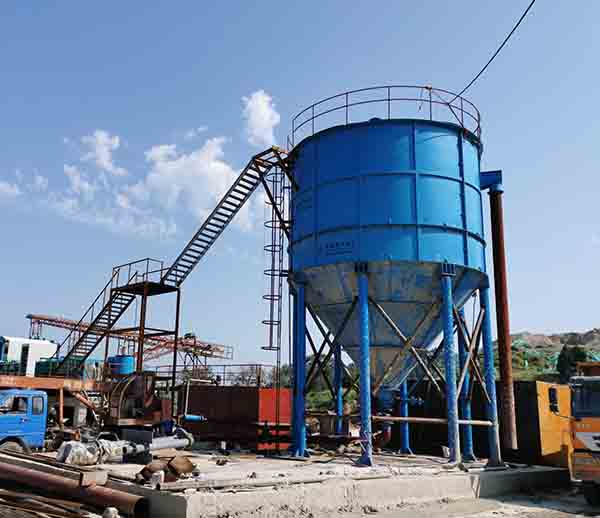
In practical applications, if the amount of flocculant is insufficient, the thickeners may overflow turbidity. In addition, too much water or too little lime can also cause the thickener overflow turbidity. Reasons and solutions for thickener overflow turbidity 1. The …
read more >>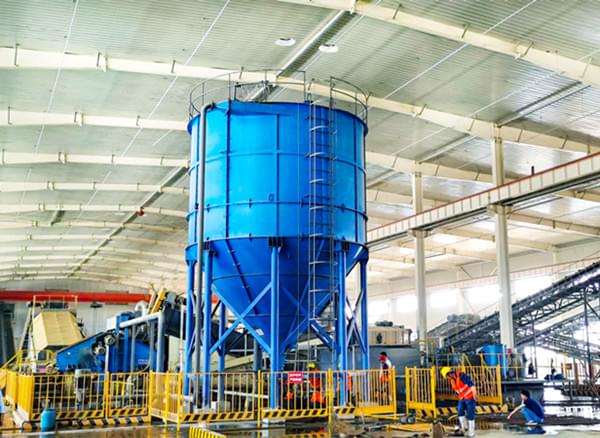
The advantages of thickeners in mineral processing include desliming, pulp classification, and product concentration. A thickener separates solid particles from liquid in a slurry through gravity settling, thereby concentrating the slurry. Mineral thickeners are widely used in mineral processing for …
read more >>
The application of high-efficiency thickeners in gold ore beneficiation can significantly increase the concentration of ore, effectively reduce production costs, and improve economic benefits. The gold ore beneficiation process generally includes crushing, grinding, flotation, concentration, and dewatering. In this process, …
read more >> The sludge thickener design includes the design of the thickening tank, the design of the bridge frame, the structure of the stirring device, and the material distribution method. The deep cone sludge thickener is a high-efficiency thickening device equipped with …
read more >>
The automatic control system for thickeners enables intelligent monitoring of the concentration process in large thickeners or deep cone thickeners. The flocculant dosage is automatically adjusted based on changes in ore feed rate, settling layer thickness, and comprehensive control strategies to …
read more >> The thickener is mainly used for wastewater treatment and leachate concentration in mineral processing plants. The increased aspect ratio extends the residence time of fine slurry in the thickener, and the application of polymeric flocculants enhances the slurry coagulation effect, resulting in …
read more >>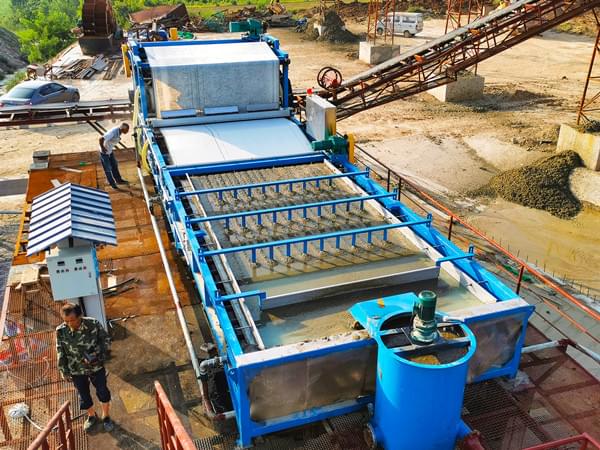
Belt filter presses primarily dewater sludge generated by sewage treatment plants. What are the costs of a belt filter press? Below is a brief overview of investment, operating, and maintenance costs. The investment and operating cost of the belt filter press 1. …
read more >>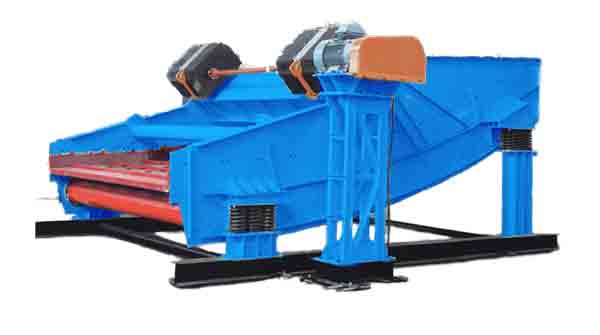
Banana screen can screen wet materials, mainly for particle size classification, desludging, dehydration, and de-mediation. Compared with traditional screening equipment, the banana screen has a higher screening capacity and is currently being widely used in large coal preparation plants and mineral …
read more >>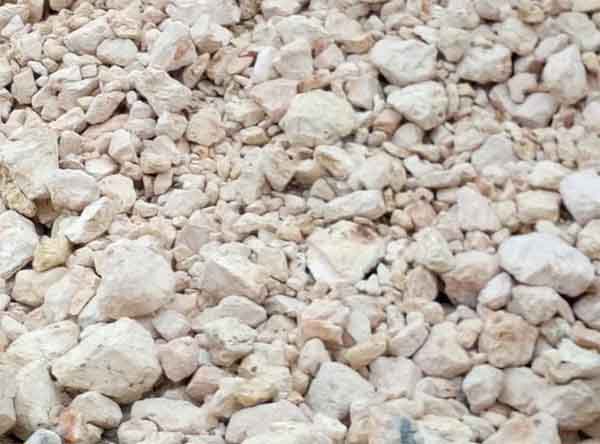
Bauxite screening and cleaning adopt a process of dry screening followed by water washing. In the screening stage, a stepped bar screen is selected, which adopts an open bar screen design in the direction of material flow and realizes anti-blocking function …
read more >> The bauxite mine has a designed annual production capacity of 1 million tons and adopts comprehensive mechanized mining with longwall retreating method. In view of the heavy mud content and low ore grade, it is necessary to build a modern screening …
read more >>
The inclination angle of the linear vibrating screen surface and the output affect each other. The larger the inclination angle of the screen surface, the greater the processing capacity, but the lower the screening efficiency. Generally, the screen surface inclination angle …
read more >>


Copyright © 2015 - 2026 Luoyang Longzhong Heavy Machinery Co., Ltd. Website Map | Privacy policy | Contact Us




Inquiry