


What Are The Factors Affecting Thickener Performance?
The thickener performance is affected by the feed concentration, flocculant, sediment layer, and operating factors.
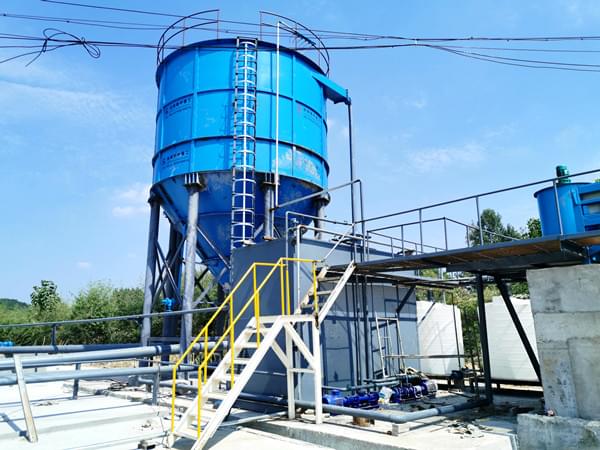
The five factors affecting thickener performance
1. Feed concentration
The feed concentration for a thickener should ideally be between 20% and 30%. However, in practice, when the feed concentration is generally between 15% and 20%, the amount of flocculant used should be increased accordingly. During operation, it is essential to maintain a stable water and ore volume to prevent the thickener from becoming too turbid due to excessively diluted slurry.
2. Flocculant
High-efficiency thickeners have small volumes and rely entirely on flocculants to increase their production capacity, so the correct use of flocculants is particularly important. The use of flocculants can effectively improve the settling properties of slurry and increase the aggregation between particles, thereby improving the concentration effect. The amount of flocculant added and the pump frequency will affect the height of the mud layer interface, and thus affect the operation of the thickener.
3. Sediment layer
The sediment layer is a relatively loose layer of mineral mud bound together by flocculants, which filters the rising water flow. It can adsorb excess flocculant in the slurry to prevent it from entering the overflow and clogging the filter cloth during replacement operations. This is quite noticeable in actual production. Without a sediment layer, the thickener overflow is always foggy and has a high content of suspended solids. When there is a sediment layer, the clarified layer is clear and the bottom is visible. The required height of the sediment layer is generally between 200-300mm.
4. Operating factors
To reduce the feed flow rate and impact force, the mud and water should flow smoothly towards the overflow direction after entering the sedimentation equipment, thereby improving the utilization coefficient of the sedimentation area. Stabilize the underflow discharge rate and ensure balanced material discharge. The bottom flow regime and concentration are relatively stable, and the overflow rate is also stable. If the bottom flow is discharged intermittently, the bottom flow regime and concentration will change, and the overflow rate will fluctuate. Selecting an appropriate flocculant based on the properties of the feed material can significantly improve the clarification and concentration effects.





Send Message
Please write down your requirement and contact details in the following form. You can also send a message to us by this email export@lylzzg.com, we will reply to you within 24 hours.