


6 Kinds of Purification Methods For Kaolin
Purification methods for kaolin include gravity separation, magnetic separation, flotation, chemical leaching, bleaching, and roasting. The purpose of kaolin purification is to remove harmful colored impurities and sandy minerals. Removing harmful colored impurities can improve the whiteness of kaolin products. Removing sandy minerals can improve the quality of kaolin products and obtain better economic benefits.
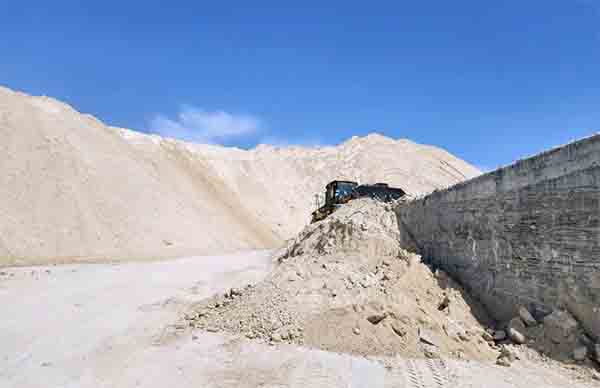
6 purification methods for kaolin
1. Kaolin resorption and purification
A. Gravity separation principle: Utilizing the density and particle size differences between kaolinite and gangue.
B. Purpose of gravity separation: To remove lightweight organic matter, as well as high-density impurities such as quartz, feldspar, and elements containing iron, titanium, and manganese.
C. Commonly used equipment or reagents: hydrocyclones, centrifuges, dispersants (sodium carbonate, sodium hexametaphosphate).
2. Kaolin magnetic separation purification
A. Magnetic separation principle: Utilizing the magnetic differences between kaolin and gangue minerals such as hematite, siderite, pyrite, and rutile.
B. Purpose of magnetic separation: To remove staining impurities such as hematite, siderite, pyrite, and rutile.
3. Kaolin flotation purification
A. Flotation Principle: Utilizing the differences in surface properties between kaolin and gangue minerals.
B. Purpose of Flotation: To process raw kaolin ore with high impurity levels and low whiteness, removing iron, titanium, and carbon impurities.
C. Common Equipment or Reagents: Flotation machine, flotation column, collector, frother, depressant.
4. Chemical leaching and purification
A. Leaching Principle: A method that selectively dissolves and removes certain impurities from kaolin using leaching agents, such as acid leaching and microbial leaching.
B. Leaching Purpose: Used for iron reduction and purification of low-grade kaolin, such as removing hematite, limonite, and siderite.
C. Common Equipment or Reagents: Sulfuric acid, hydrochloric acid, nitric acid, hydrofluoric acid, oxalic acid, phosphoric acid, microorganisms, etc.
5. Kaolin bleaching and purification
A. Bleaching Principle: By changing the valence state of harmful elements in kaolin, they are converted into soluble substances, which are then removed through washing. For example, poorly soluble iron is converted into soluble iron and removed through a washing process.
B. Bleaching Purpose: To remove iron-containing impurities and significantly improve the whiteness of kaolin products.
C. Common Equipment or Chemicals: Sodium hypochlorite, potassium permanganate, hydrogen peroxide, sodium dithionite, oxalic acid, etc.
6. Kaolin roasting and purification
A. Calcination Principle: Utilizing the differences in chemical composition and reactivity between kaolin and impurities, high-temperature roasting, magnetization roasting, or chlorination roasting is performed.
B. Purpose of Roasting: To remove carbonaceous impurities, iron-containing impurities, metallic elements, and sulfides from kaolin.
C. Common Equipment or Reagents: Rotary kiln, roasting furnace, chlorinating agents.
Practice has shown that a single purification process is insufficient to obtain high-quality kaolin products, especially low-grade coal-series kaolin and kaolin with complex ore composition. Therefore, in actual production, a combination of multiple purification process is often used to improve the quality of kaolin products.





Send Message
Please write down your requirement and contact details in the following form. You can also send a message to us by this email export@lylzzg.com, we will reply to you within 24 hours.