


Advantages And Disadvantages Of Different Kaolin Purification Methods
Kaolin purification methods include gravity separation, magnetic separation, flotation, chemical leaching, bleaching, and roasting. In applications, it is necessary to comprehensively consider the properties of the raw ore, product requirements, and production cost factors. Appropriate purification methods or a combination of methods should be selected to achieve the best purification effect. So what are the advantages of each of these purification methods?
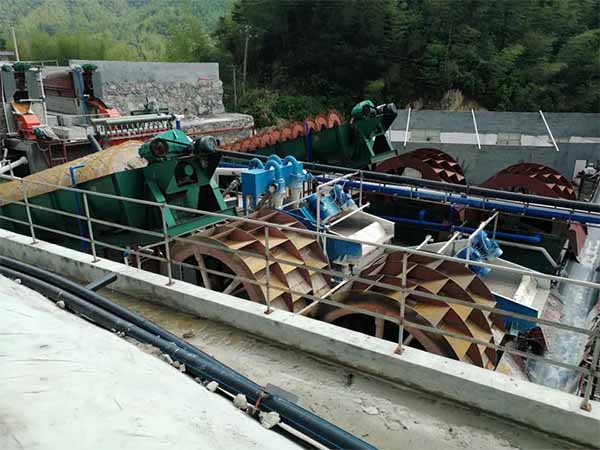
Advantages and disadvantages of different kaolin purification methods
1. Kaolin reselection and purification
Gravity separation is a physical separation method based on differences in mineral density. The gravity separation process can effectively remove impurities with high density, such as quartz, feldspar, and organic matter. Gravity separation purification is effective in removing organic matter, iron impurities, and quartz from kaolin. However, it is difficult to obtain high-purity kaolin with high yield.
2. Kaolin magnetic separation purification
Magnetic separation purification can effectively remove iron impurities from kaolin, improving its whiteness and purity. Simple to operate. No chemical reagents are required, resulting in lower costs. Suitable for different types of kaolin. However, magnetic separation alone is insufficient to produce high-quality kaolin products. It is necessary to combine it with other processes such as chemical bleaching to further reduce the iron content of the kaolin products.
3. Kaolin flotation purification
Flotation purification can significantly improve the whiteness of kaolin and is suitable for processing raw kaolin ore with many impurities and low whiteness. However, the production cost is high, and it is easy to cause environmental pollution.
4. Chemical leaching and purification
Chemical leaching purification removes impurities through chemical reactions, with significant results. However, the production cost is relatively high, which may have some impact on the environment. It is generally used for iron reduction and purification of low-grade kaolin, such as removing hematite, limonite, and siderite.
5. Kaolin bleaching and purification
Bleaching and purification of kaolin can remove iron-containing impurities and significantly improve the whiteness of kaolin products. Chemical bleaching has a relatively high production cost. It is mostly used for further purification of kaolin concentrate that has already undergone impurity removal.
6. Kaolin roasting and purification
Calcination and purification can significantly improve the whiteness of kaolin and increase the pore volume and chemical reactivity of calcined products, thereby obtaining higher quality kaolin products. However, it consumes a lot of energy and may cause environmental pollution.





Send Message
Please write down your requirement and contact details in the following form. You can also send a message to us by this email export@lylzzg.com, we will reply to you within 24 hours.