


5 TPH Low-Iron Silica Sand Beneficiation Plant in UAE
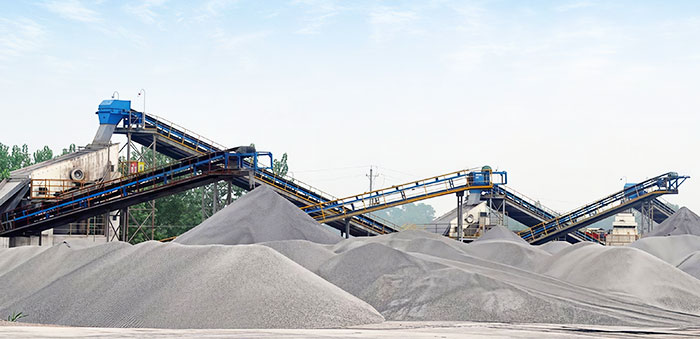
A silica sand producer in UAE needed one 5 t/h line that could deliver low-iron graded silica in several sizes, led by QS-300 at 0.10–0.30 mm. The feed ran at SiO2 98.5–99.3% and Fe2O3 0.04–0.08%, with 80–85% of the material between 0.10 and 0.60 mm.
The targets were SiO2 at 99.5% or better, Fe2O3 as low as the feed allows, low moisture, and a repeatable size distribution.
Material Analysis & Our Design
The feed runs 0.04–0.08% Fe2O3, and a product at 99.5% SiO2 or better means cutting that roughly in half. Iron in sand does not come in one form, so no single machine removes it. The circuit carries three duties instead, one for each form the iron takes.
| Iron form | Where it sits | Removal stage | Equipment |
|---|---|---|---|
| Surface oxide film | Stained onto the grain | Scrubbing | Attrition scrubber |
| Iron carried in clay | In the slime fraction | Desliming | Spiral washer + hydraulic classifier |
| Heavy minerals: limonite, hematite, tourmaline, biotite | Locked in the grain, out of reach of washing | Wet high-intensity magnetic separation, 1–2 stages | WHIMS, intensity set by bench test |
Two decisions were held back until the sample had run. Magnetic intensity is the first: the client’s sand goes through several field strengths, single pass and double, with Fe2O3 measured after each one, because a guaranteed iron figure written before that work is a guess rather than a promise. Screen setup is the second: the three bands are set on fixed decks and one deck stays free with a replaceable screen, so a new size does not need a rebuild.
| Output | Size band | How it is set | Note |
| QS-300 | 0.10–0.30 mm | fixed decks | lead product, carries most of the volume |
| Coarse sand | 0.30–0.60 mm | fixed deck | third saleable band |
| Custom band | any cut inside 0.10–0.60 mm | one free deck, replaceable screen | changeover per order |
| Flour (optional) | QF-75 / QF-45 / QF-25 | mill plus air classifier cut point | top size 75, 45 or 25 micron |
The optional flour section runs a ceramic-lined mill and an air classifier. Steel media would put iron back into a product judged in hundredths of a percent. Capacity falls as the cut gets finer, and flour output is always a fraction of the sand feeding it.
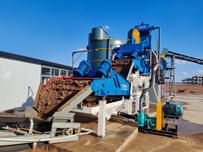
Silica Sand Beneficiation Plant Process Flow
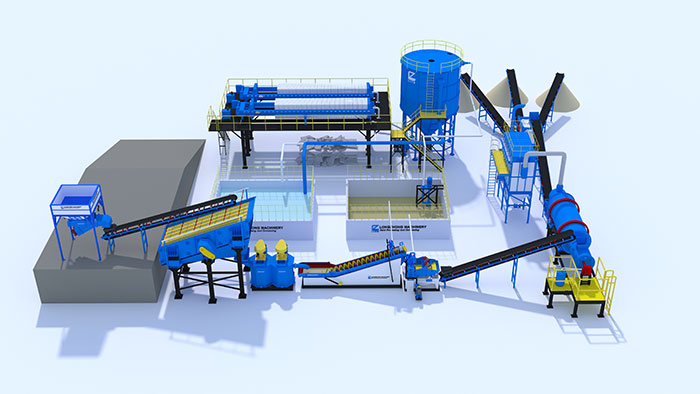
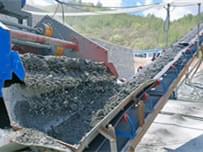
- Feed: Raw silica sand goes into the hopper and a controlled vibrating feeder sets the pace at 5 t/h, so the rate stays steady no matter how the loader operator works.
- Pre-screen: Ahead of the scrubber, a vibrating screen takes off everything above 0.60 mm. It is a small step that saves wear, since the drum never sees material it cannot handle.
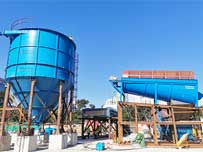
- Scrubbing: The sand then goes into an attrition scrubber, where high-solids agitation grinds the grains against one another and breaks the surface film loose. From there a spiral washer and hydraulic classifier split the 0.10–0.60 mm product away from the slime and the sub-0.10 mm fines.
- Magnetic Separation: Wet high-intensity magnetic separation follows, one or two stages depending on what the bench tests showed, and the magnetic fraction leaves the circuit here rather than returning to it.
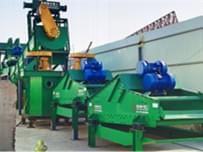
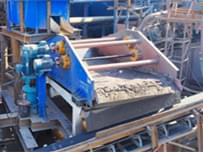
- Dewatering: Dewatering comes next, on a vibrating screen backed by a hydrocyclone, which is where the 0.10 mm edge material gets caught instead of running off with the water.
- Drying: The dewatered sand goes through a gas-fired rotary dryer. Moisture has to come down far enough that the product screens cleanly and does not cake in the silo.
- Grading and Storage: Dry sand then passes a precision multi-deck screen that cuts the saleable bands, oversize returns to the head of the circuit, and each grade drops into its own bin for packing.
- Water Circuit: Water from washing, dewatering and the thickener comes back through a return pump, with a filter press handling the sludge. The plant runs on a closed-loop water circuit, no settling pond, which on a site this size is usually the difference between a permit and a shutdown.
Silica Sand Beneficiation Plant Equipment Configuration
| Item | Equipment | Function |
| Feed | Hopper + controlled vibrating feeder | Steady 5 t/h feed |
| Pre-screen | Vibrating screen | Cuts oversize above 0.60 mm |
| Scrubbing | Attrition scrubber | Removes surface iron and clay film |
| Washing / desliming | Spiral washer + hydraulic classifier | Splits 0.10–0.60 mm from fines below 0.10 mm |
| Iron removal | Wet high-intensity magnetic separator | 1–2 stages, intensity set by test |
| Dewatering | Dewatering screen + hydrocyclone | Drops free water, recovers edge fines |
| Drying | Gas-fired rotary dryer | Low moisture for screening and shipping |
| Grading | Precision multi-deck screen, replaceable decks | QS-300 plus 0.10–0.20 / 0.20–0.30 / 0.30–0.60 mm |
| Storage | Product silos + packing | One bin per grade |
| Water | Thickener + return pump + filter press | Closed-loop recycle |
| Flour (optional) | Ceramic-lined mill + air classifier | QF-75 / QF-45 / QF-25 |
What the Silica Sand Beneficiation Plant Delivers
Graded silica at 99.5% SiO2 where the feed allows it, iron at whatever the pilot run proves, and every band held inside a size range that repeats from shift to shift. Fine sand gets captured rather than lost, water gets recycled rather than ponded, and the whole thing was specified after testing rather than before it. That order is the part worth copying.
Build a Silica Sand Beneficiation Plant
LZZG builds silica sand beneficiation and grading plants from 5 t/h upward: scrubbing, desliming, magnetic separation, drying, precision screening, water recycling, and an optional flour section on top. Send a sample with a target spec and we will size the circuit against measured results.
Previous:Soil Wash Plant: How Soil Washing Works and How to Size It
Next:none





Send Message
Please write down your requirement and contact details in the following form. You can also send a message to us by this email export@lylzzg.com, we will reply to you within 24 hours.