


6 Common Faults & Solutions of Stainless Steel Linear Screen
Published: 12/10/2016
Even the best equipment can encounter various issues during use. How should we address problems that arise when a stainless steel linear screen is in operation? What are the solutions?
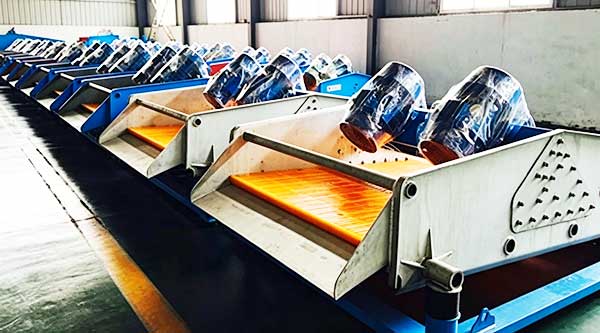
1. Structural Cracking
The fault occurs gradually, mainly due to long-term operation at critical frequency. Common triggers: loose side plate bolts, severely deformed damping springs causing unbalanced body height, excessive weight deviation of eccentric blocks. These lead to uneven stress and resonant fatigue, resulting in cracked side plates and broken beams.
Solutions: Replace damaged parts and tighten all bolts fully. Drill Φ6mm crack stop holes at both ends of cracks to prevent expansion. Reserve air holes on reinforcing plates during welding to avoid air trapping deformation.
2. Poor Screening Quality
Caused by improper operation and working conditions: blocked screen holes, high fine powder content, material agglomeration from excessive moisture, over-thick material layer and uneven feeding. Loose screen mesh and slipping belts also lead to insufficient vibration force.
Solutions: Clean the screen mesh, stabilize feeding and reduce material moisture. Tighten mesh and belts. Run the machine in reverse briefly after troubleshooting to optimize material stratification and screening precision.
3. Material Deviation on Screen Surface
Main causes: insufficient screen box rigidity, prolonged resonance, loose connecting bolts, large horizontal deviation, uneven or failed support springs, broken mesh and unbalanced feeding, which disrupt material flow and cause local accumulation.
Solutions: Fasten loose bolts, calibrate equipment level, replace defective springs and adjust support height. Renew damaged mesh and ensure even feeding for smooth material conveyance.
4. Reduced Speed of Vibration Motor
Caused by poor maintenance: insufficient bearing grease, inferior or overfilled grease leads to bearing blockage and seal jamming, increasing operation resistance and causing overheating and speed drop.
Solutions: Remove deteriorated grease, inject qualified lubricant in standard dosage and conduct regular bearing maintenance to ensure normal motor operation.
5. Failure to Start
Electrical faults: insufficient voltage, damaged motor, faulty circuit components and dust overload.
Mechanical faults: fallen vibrator coupling bolts, solidified grease and displaced eccentric block angle.
Solutions: Fix circuit faults and clear dust. Disassemble and clean the vibrator, fasten connectors and readjust eccentric block angles to restore normal vibration amplitude.
6. Excessive Operating Noise
Causes include worn bearings, loose body bolts, cracked beams and invalid damping springs.
Solutions: Tighten loose bolts. Replace defective bearings, beams and springs to eliminate abnormal noise and vibration risks.





Send Message
Please write down your requirement and contact details in the following form. You can also send a message to us by this email export@lylzzg.com, we will reply to you within 24 hours.