


How a Sand Washing and Recycling Machine Removes Clay and Recovers Fines
Published: 06/05/2018
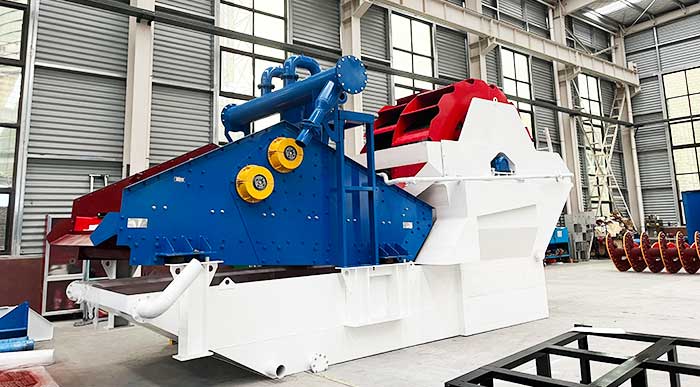
When crushed sand comes off a VSI or cone crusher, it looks clean — but sieve analysis tells a different story: 15–25% of the weight is stone powder passing 75 µm, and another 3–8% is clay and silt coating the grains. That mud doesn’t wash away on its own. A sand washing and recycling machine is the skid-mounted unit that scrubs the clay off and recovers the fine sand that would otherwise be pumped to a tailings pond.
Why Crushed or Natural Sand Needs Washing
3 problems show up when sand isn’t washed, and they’re not obvious until the concrete plant complains.
- Stone powder changes the gradation. Crushed sand has too much material below 0.15 mm. The fineness modulus drops, the sand sits finer than spec, and concrete mix designers either add more cement (cost) or water (strength loss). At 28 days, unwashed crushed sand can run 5–8% lower in compressive strength than the same sand washed to GB/T 14684 or ASTM C33.
- Clay coatings kill bond. Clay doesn’t just add weight — it coats the sand grain and breaks the cement paste-to-aggregate bond. Even 2% clay content can drop flexural strength noticeably. River sand dredged from slow-moving bends is often 5–8% silt; sea sand adds chloride on top.
- Fine sand goes to waste. A traditional wheel washer overflows 15–25% of the feed as “slurry water.” That water isn’t just dirty — it carries 0.074–0.5 mm of perfectly saleable fine sand. Without a recovery circuit, you’re pumping product into a pond and buying it back as manufactured sand later.
How the Integrated Unit Works
A standalone washer and a washing-and-recycling unit look similar from the outside, but the second one adds a closed loop between the washer overflow and a dewatering screen. The process runs in four steps:
1. Scrubbing in the wash tank. Sand and water enter the tank at a 3–5:1 water-to-sand ratio. The rotating wheel bucket (or spiral log) agitates the mix, shearing clay bonds. Clean sand lifts over the weir; clay and light silt float off with the overflow.
2. Slurry pumping. The overflow drops into a sump. A rubber-lined slurry pump pushes it at 1.2–1.5 bar up to a cluster of hydrocyclones mounted above the dewatering screen.
3. Hydrocyclone classification. Inside each cyclone, centrifugal force pushes the heavier 0.074–0.5 mm particles to the wall and down to the underflow. Clay, silt and dirty water exit through the vortex finder and go to settlement. This is the step a standalone washer doesn’t have — it’s what recovers the fines.
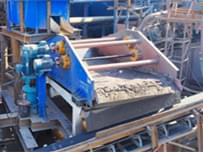
4. Dewatering. The hydrocyclone underflow drops onto a polyurethane-panel screen that shakes at 960–1200 rpm. Product leaves at 15–20% moisture — stackable, conveyable, no dripping. Screen wash water returns to the sump, so the loop closes.
What Comes Out the Other End
Numbers vary by feed, but on a typical crushed sand plant:
- Finished sand mud content: drops from 8–15% to under 3%
- Fines recovery rate: 85–92% of the 0.074–0.5 mm fraction that would otherwise be lost
- Product moisture: 15–20% off the screen (stackable without dripping)
- Slurry pond load: drops by roughly 60–70%, because most solids are recovered
- Extra saleable sand: 5–10% more product per tonne of feed, depending on how much powder the crusher generates
On a 100 t/h plant, that 5–10% is 5–10 tonnes an hour of material you were previously pumping away.
Which Feed Materials Is It For
- Crushed sand from VSI or cone crushers — the most common application, where stone powder exceeds spec
- River and lake sand — removing silt and clay coatings before concrete production
- Sea sand — washing chloride and silt (note: sea sand still needs a separate chloride test for structural concrete)
- Silica and frac sand — where tight gradation and low turbidity matter; see our silica sand processing line for the full flow
- Tailings and aggregate recovery — turning dam-bound fines into saleable product
- Tunnel muck and construction waste — converting spoil into manufactured sand
- Glass and foundry sand — where the 0.15–0.6 mm fraction must be tightly controlled
If your feed is hard rock granite or limestone, the cyclone liners and pump wet ends need rubber or polyurethane — standard cast iron won’t last. Tell us the abrasiveness of your feed when you ask for a quote.
How to Choose the Right Size
The unit comes in seven standard models (DL40 through DL250), covering 20–250 t/h of feed. Picking the right one isn’t just about matching your crusher output:
- If your feed has >20% stone powder, size up one model — the hydrocyclone cluster has to handle more solids
- If you’re running sea sand or tunnel muck, plan for a bigger wash tank (more retention time = better clay removal)
- If water is expensive, ask for the closed-loop configuration — screen wash water recirculates, cutting make-up water by 60%
- If site space is tight, the skid-mounted DL40/60 fits in roughly 6 × 5 m; the DL200/250 needs about 9 × 8 m
Full dimensions, motor power, hydrocyclone count and screen panel sizes are on the sand washing & recycling machine product specifications page.
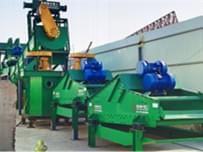
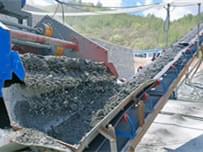
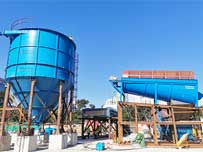
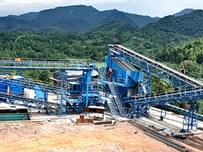
For a sense of how this sand washing and recycling machine runs in production, our 100 t/h silica sand project runs a DL-series unit as the final wash and recovery stage, after scrubbing and classification. The customer’s finished sand hits mud content <0.1% and ships to glass plants.





Send Message
Please write down your requirement and contact details in the following form. You can also send a message to us by this email export@lylzzg.com, we will reply to you within 24 hours.